
Search Anderson County Dissolution Of Marriage
Anderson County Dissolution Of Marriage records are split between county court offices in Clinton and the state vital records office in Nashville. If you need a full case file, a final decree, or a shorter certificate, the right place depends on what you want to prove. County files give the most detail. State certificates give a quick summary. This page points you to the offices, search paths, and record types that matter most, so you can start with the right source and move faster when you need Anderson County records.
Anderson County Quick Facts
Anderson County Dissolution Of Marriage Records
Anderson County keeps dissolution cases through more than one office, and that matters when you start a search. The Anderson County Circuit Court Clerk maintains divorce records and serves the Clinton and Oak Ridge divisions. The Anderson County Clerk & Master also handles divorce lawsuits in Chancery Court. That split can help if you do not know which division heard the case. Some cases move through Circuit Court, while others stay with Chancery Court, so the file you need may sit in a different room than you expect.
Older material is another strength here. The Anderson County Archives keeps marriage bonds, divorce records, probate records, wills, estates, and court records from 1811 to the present. That range is useful for family history work and for older case research. It also gives you a place to look when a courthouse file is thin or a clerk points you to archived records. Anderson County is a good example of how Tennessee divorce research often means checking both the court file and the local archive before you stop.
The county offices also try to keep the public moving. Online dockets are available for General Sessions and Circuit Court. Forms and fee schedules are posted by the local offices, and the courthouse staff work with judges, attorneys, and residents who need copies or case information. That mix of online access and in-person support makes Anderson County easier to work than many places once you know which office holds the part of the record you need.
The Tennessee Court System can help you understand how county court records are organized statewide. It is the best place to start if you want general court guidance before you call Clinton. For state certificates and faster proof of the event, the Tennessee Department of Health Office of Vital Records still serves as the main source.
Anderson County records work best when you treat the case like a trail. Start with the court office, then check the archives, then move to the state certificate if you need a short form record. That order saves time and keeps you from ordering the wrong record first.
The Tennessee Office of Vital Records keeps Tennessee divorce certificates for fifty years before they move to the state archive. Anderson County files stay local longer when you need full case detail.
The Anderson County Circuit Court Clerk office is the main starting point for recent county files.
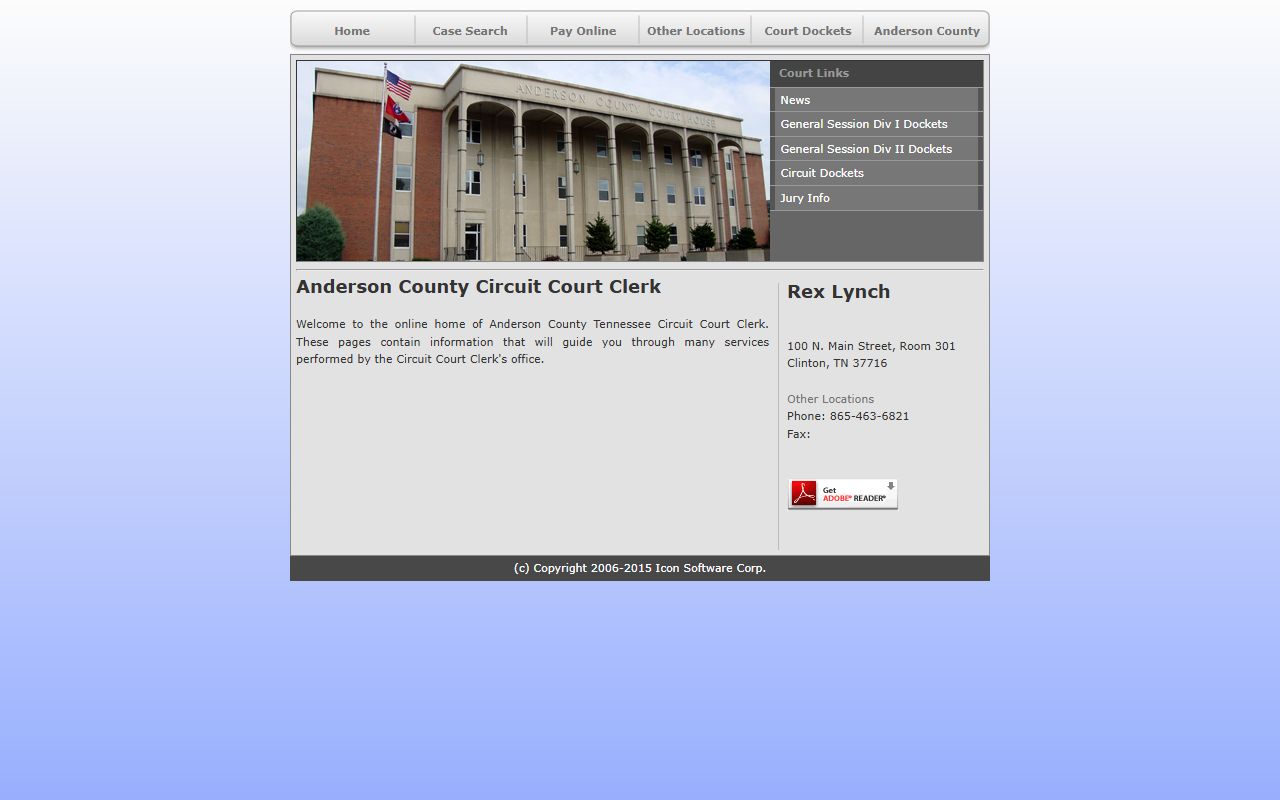
That office is where many residents begin when they want a copy, a docket check, or a case number.
Anderson County Dissolution Of Marriage Court Offices
Anderson County uses both Circuit Court and Chancery Court for family law matters. That means the same county can hold different pieces of the same story in different rooms. The Circuit Court Clerk keeps the court file, while the Clerk & Master handles Chancery Court matters, child support court work, and record maintenance tied to those cases. If a divorce was agreed on, contested, or later changed, the file may pass through more than one office. That is normal in Anderson County, and it is why clerks often ask for names, dates, and case numbers before they search.
The Clerk & Master office is especially useful when a case started in Chancery Court. It also handles billing and collection of litigation taxes and court costs. That can matter if you need to confirm whether a case finished cleanly or whether old paperwork still sits in the court file. If you are not sure where to begin, call the court office first and ask which division handled the divorce. Anderson County staff can usually steer you to the right desk without much delay.
The county archives give the page more depth. They keep divorce records with marriage bonds, probate files, court records, and other old material. For researchers, that means you may find the divorce itself, the marriage that came before it, and related estate papers in one county. The archives also allow public access to holdings except juvenile records, which is a useful boundary to know before you plan a visit.
The Tennessee fee regulation schedule matters when you order copies. A search of the files and issuance of a copy can cost the same amount even if the record is not found. That keeps the search process simple, but it also means you should have strong details before you submit a request.
The Anderson County Clerk & Master page reflects the Chancery Court side of the county record system.
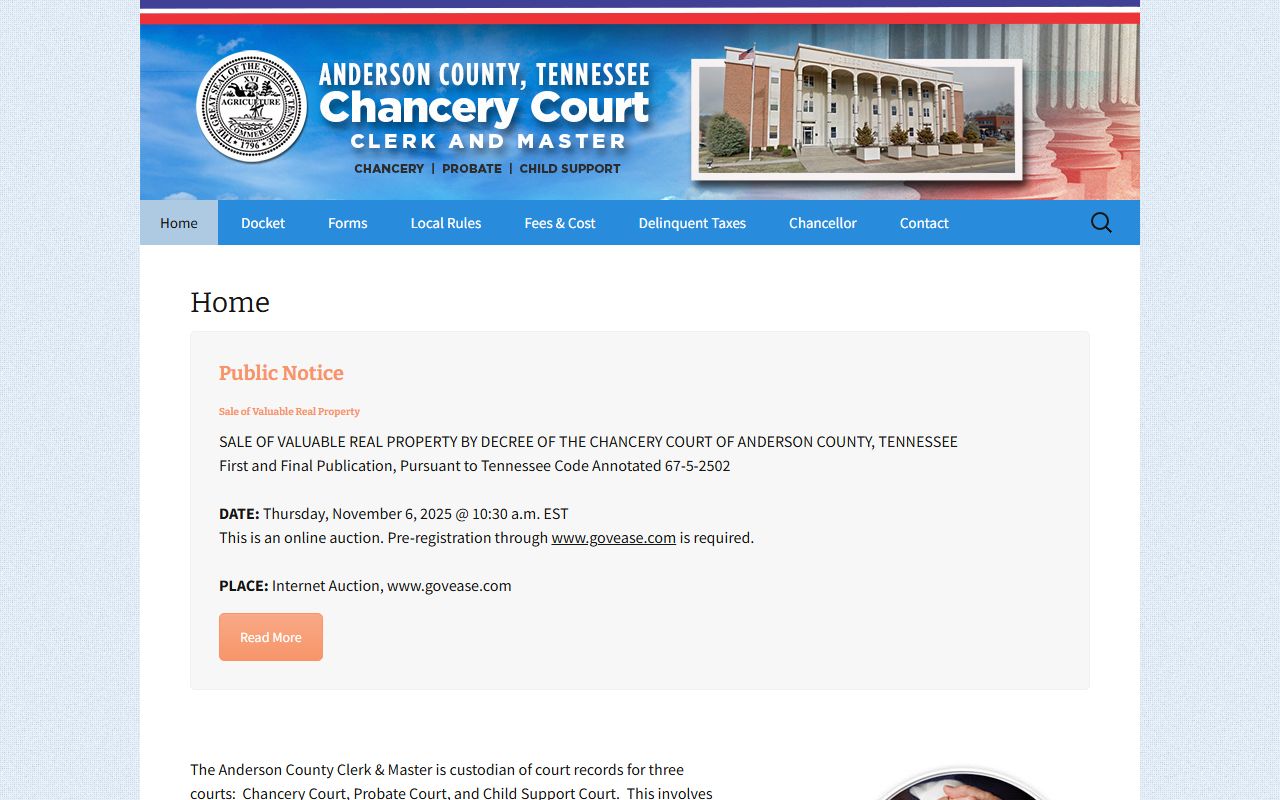
Use it when the case sat in Chancery Court or when you need help tracing court costs and related filings.
How to Search Anderson County Dissolution Of Marriage
Searches in Anderson County work best when you start with the clerk, then move outward if the first office does not have what you need. Online dockets can give you a fast read on whether a case exists. In-person searches can pull full files and older papers. You can also use the Tennessee Court System site for statewide guidance and then follow up with the local office in Clinton. That is the best path when you do not know whether the case was heard in Circuit Court or Chancery Court.
Anderson County staff can usually search by name, date, or case number. The more exact your details are, the better the result. A common mistake is to assume the case stayed in one office forever. In practice, records can move, get copied, or be stored in more than one place. That is why you should ask about both the current file and the archived file if the divorce is older.
To search an Anderson County Dissolution Of Marriage record, have these details ready:
- Full name of either spouse
- Approximate filing year
- Whether the case was in Circuit Court or Chancery Court
- Case number, if you have it
Anderson County online dockets are helpful for basic checks, but the full record still lives with the court or archive. That means a quick web search can tell you the case exists, while a courthouse or archive visit tells you what the decree says. If you need official copies, ask the clerk which office issues them and whether a search fee or copy fee applies.
The Tennessee Supreme Court divorce forms page is useful too. It shows the forms used in agreed divorces and gives you a sense of what a Tennessee divorce packet looks like before you file. That helps if you are trying to match a local Anderson County case file to the paperwork that created it.
Anderson County Dissolution Of Marriage Filing Steps
Filing in Anderson County follows Tennessee law, but the local clerk still controls the file. The complaint starts the case, and the clerk assigns a docket number. If the parties agree, the case may move as an irreconcilable differences divorce. If they do not agree, the case can proceed on a fault ground. Either way, the papers you file become part of the county record and may later be copied or archived.
Tennessee residency rules come from T.C.A. § 36-4-104 and the grounds for divorce come from the same chapter. If the cause happened in Tennessee, the residency rule is simpler. If it happened elsewhere, one spouse must have lived in Tennessee for six months before filing. Tennessee also sets waiting periods of sixty days without minor children and ninety days with minor children under T.C.A. § 36-4-101. Those rules shape the pace of the case and the file that ends up in Anderson County.
Service matters too. The other spouse must get the papers. Once service is done, the court file grows with returns, notices, agreements, and the final order. The process is simple to describe, but the paperwork can get messy if the parties change addresses or if one spouse moves out of state. Anderson County clerks see those issues often, so a clean filing packet helps a lot.
The Tennessee Court System and the court-approved forms page help people who want to file without a lawyer. If the case is agreed, the forms can guide the packet from the first complaint to the final order. That is often the fastest way to keep the county file neat and ready for later copies.
Note: A clear case file is easier to copy later, so keep names, dates, and addresses consistent from the first filing through the final decree.
What Anderson County Dissolution Of Marriage Files Show
Anderson County case files can hold a lot more than a final decree. The complaint shows what started the case. The answer shows how the other spouse responded. A marital dissolution agreement can spell out property, support, and custody terms. Temporary orders, notices, and returns of service may sit in the same file. That makes the county file the best source when you want the full story, not just proof that the marriage ended.
Older records in the archives can add even more context. The county keeps marriage bonds and other historical court material, so you may find pre-divorce records that help explain the file. For family history work, that matters. For legal work, it can show names, dates, and the exact court path the case followed. The archives also keep public holdings open except juvenile records, which means a lot of useful material stays reachable if you know the right office.
The main items you are likely to see are:
- Complaint for divorce
- Answer or response from the other spouse
- Marital dissolution agreement
- Final decree or final order
- Returns of service and hearing notices
The Anderson County Archives site shows where older county files and copies are kept.
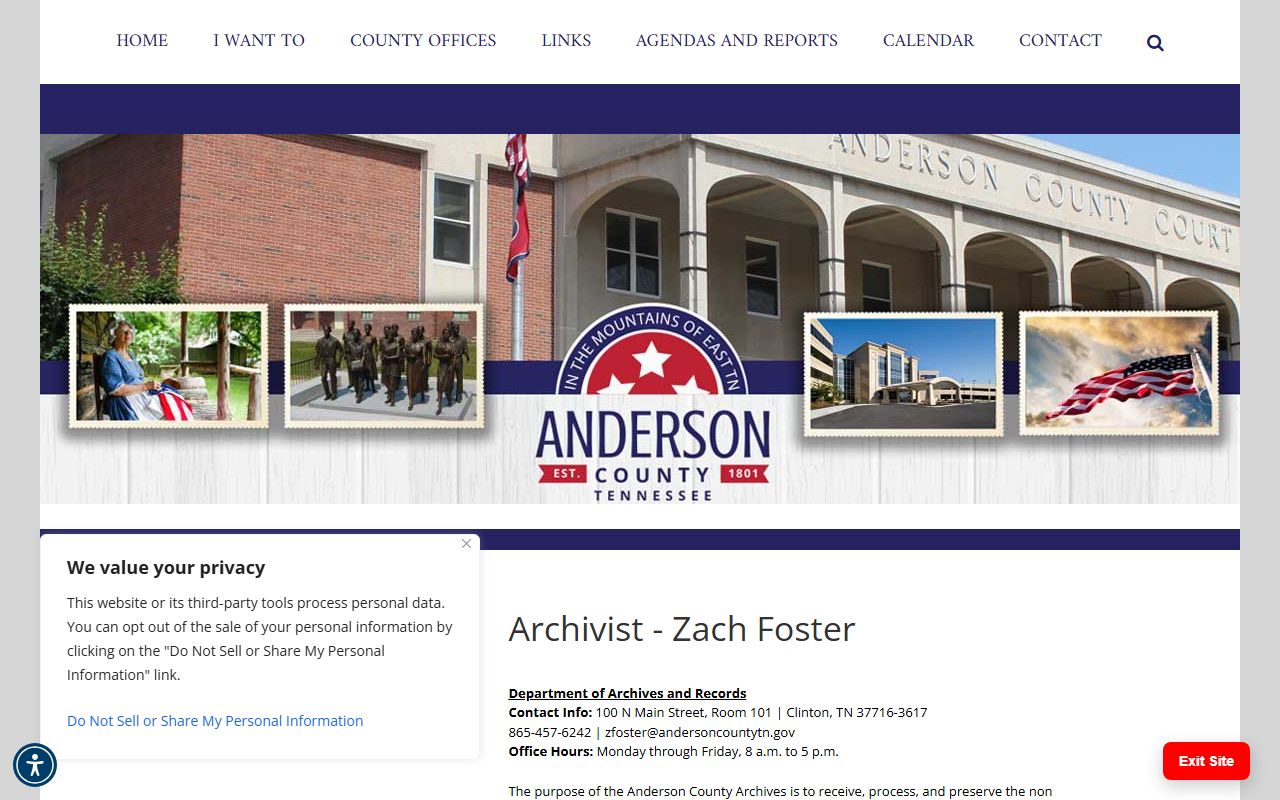
That archive is the key stop when a case is old, the courthouse file is thin, or you need a broader record trail.
Anderson County Dissolution Of Marriage Fees and Copies
Anderson County copy fees are easier to understand once you split the record into two tracks. The archives charge non-certified and certified copy fees by page. Non-certified copies are $1 for the first page and $0.50 for each additional page. Certified copies are $2 for the first page and $0.50 for each additional page. That makes the archives a good option when you need older material and do not need a state certificate.
The state side is different. The Tennessee Office of Vital Records charges $15 for a certified divorce certificate. The fee applies even if the record is not found. That is useful to know before you order, because the state certificate proves the event but does not replace the county decree. If you need the exact terms of the divorce, the county file is still the better source.
The Tennessee fee schedule also explains that the search and copy charge can apply even when a record is not located. That rule keeps the state and county search process straightforward, but it also means you should gather good names and dates before you request anything. A careful search is faster than a broad one.
Anderson County residents who need a plain copy usually pay less than people who want a certified copy. That is true at the archive and at the court office. Certified copies matter when you need to prove a divorce to another office, while plain copies work for reading the file or checking old facts.
Public Access to Anderson County Dissolution Of Marriage
Most Anderson County Dissolution Of Marriage records are open to the public unless a judge seals part of the file or a document is protected for privacy. The Tennessee Public Records Act gives people a way to request records from local offices, and the county courts can also provide public case information when it is available. That makes divorce research in Anderson County a public-record task in most situations, not a special-access task.
The Tennessee Public Records Act guidance explains that a custodian should act within seven business days if a record is not immediately available. It also explains that requests can be made in person or by other accepted means. That helps when you cannot visit Clinton right away. If your request is simple, the office should be able to tell you whether the file is open, redacted, or ready for pickup.
Do not expect every line in the file to be visible. Social Security numbers, account numbers, and some child-related details may be hidden from public copies. That is normal. The rest of the file is often still accessible, especially in older county records. If you need the whole file, ask the clerk what can be released and whether a certified copy is available.
Note: Public access is broad, but sealed documents and juvenile material are still protected in Anderson County, so ask before you assume a file is complete.
The Tennessee Bar Association resources page can help if you need lawyer referral or family law support while you search. It is not a court office, but it can be useful when your record search turns into a live case problem.
Legal Help for Anderson County Dissolution Of Marriage
Anderson County residents who need help with a divorce file can use state court guidance and local court staff together. The Tennessee Supreme Court divorce forms page is the best self-help tool for agreed cases. It shows the packets used for a divorce without major disputes. That helps you compare your own file to the forms that created it and can make a courthouse visit less confusing.
For more general court help, the Tennessee Court System explains court structure, filing basics, and case access. It is useful when you are trying to figure out whether your Anderson County case belongs in Circuit Court, Chancery Court, or the archive. The state site also gives you a clean place to start before you call the local clerk.
If you need attorney help, the Tennessee Bar Association resources page can point you toward family law support. Some people only need form help. Others need a lawyer because the case involves children, property, or a dispute over the decree. In either situation, the record is easier to manage when you know which office holds the file and what stage the case reached.
Anderson County records are also tied to related county papers such as marriage bonds, probate files, and court records. Those can matter when a divorce changed a property transfer or when a later estate file refers back to the marriage. The county archive is the best place to look when the divorce record itself is not the whole story.
The Anderson County Archives is a useful final stop for older files and related county history. That is especially true when the case was filed long ago and the courthouse record is thin.
Related Anderson County Records
Anderson County divorce research often leads to other record sets. The county archives hold marriage bonds, probate records, and court records. Those materials can help you confirm a spouse’s name, track a property change, or see what happened after the divorce decree. The circuit clerk and Clerk & Master office can also help you sort current case work from older archival material.
When you need to compare a certificate to a decree, start with the state office and then move back to the county file. The state certificate proves the event. The county case shows the terms. That two-step search is often the cleanest path for Anderson County.
For more official court guidance, use the Tennessee Court System and the approved forms page. For older county history, use the Anderson County Archives. For current county files, use the Circuit Court Clerk or Clerk & Master office in Clinton.