
Search Tennessee Dissolution Of Marriage
Tennessee Dissolution Of Marriage records are found through county trial courts, the Tennessee Office of Vital Records, and older archive collections. A Tennessee search often starts with the county where the case was filed, then moves to the state certificate office if a shorter proof record is needed. This guide explains where Tennessee keeps case files, what each office can provide, how long records stay with vital records before transfer, and which official Tennessee links help you search, request, or confirm a dissolution record.
Tennessee Dissolution Of Marriage Facts
Tennessee Dissolution Of Marriage Sources
Tennessee keeps Dissolution Of Marriage records in more than one place. That matters. A court file and a state certificate are not the same record. The fullest Tennessee record usually sits with the county court that handled the case. In many counties that means Circuit Court, Chancery Court, or both. Those files can include the complaint, responses, motions, marital dissolution agreement, and final decree. The state keeps a shorter certificate record for divorces reported to the Tennessee Office of Vital Records.
The official statewide certificate source is the Tennessee Department of Health Office of Vital Records. The research shows that Tennessee keeps divorce records there for 50 years, then transfers older sets to the archives. The broader court access path starts with the Tennessee Court System, but the actual record holder is still local in most cases. That county-first rule shapes almost every Tennessee Dissolution Of Marriage search.
A lead source for Tennessee Vital Records is the state vital records portal, which explains the state office, ordering methods, and certificate access for Tennessee Dissolution Of Marriage requests.
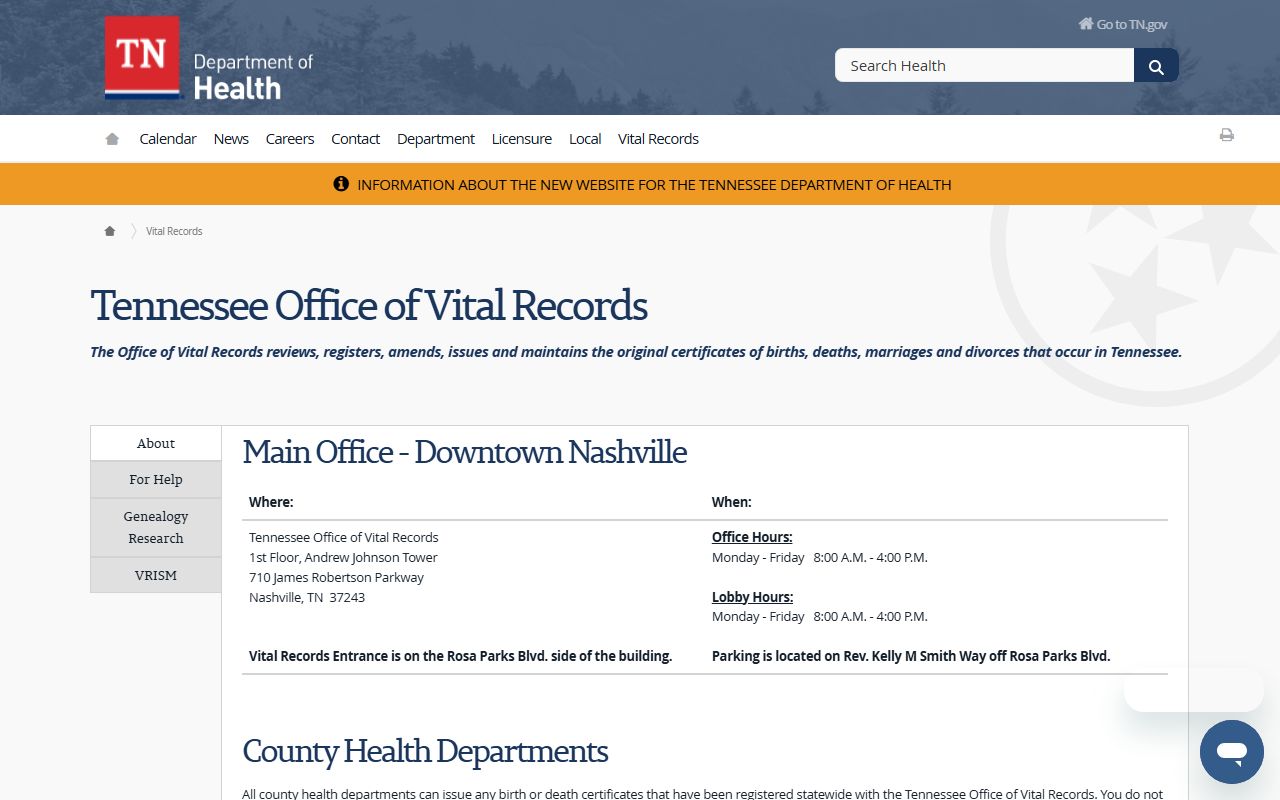
That Tennessee page is the best state entry point when you need a certificate rather than the full county case file.
Find Tennessee Dissolution Of Marriage Records
Most people search Tennessee Dissolution Of Marriage records for one of three reasons. They need proof of a divorce, they need the full decree, or they need an older historical record. Each path points to a different office. If you know the county, start there. That is the fastest way to find a Tennessee case file. If you only need a certified statement that a divorce took place, the state office is often enough. If the divorce is older than 50 years, the archives may be the correct Tennessee source.
The CDC Tennessee vital records guide confirms the same retention pattern and ordering basics. It also reinforces an important rule. If the event did not occur in Tennessee, you must contact the other state. Tennessee will not issue a record for another jurisdiction. That sounds simple, but it saves time when a search starts with the wrong state.
The federal CDC guide for Tennessee mirrors the state rules on identification, payment, and the 50-year retention period for Tennessee Dissolution Of Marriage certificates.
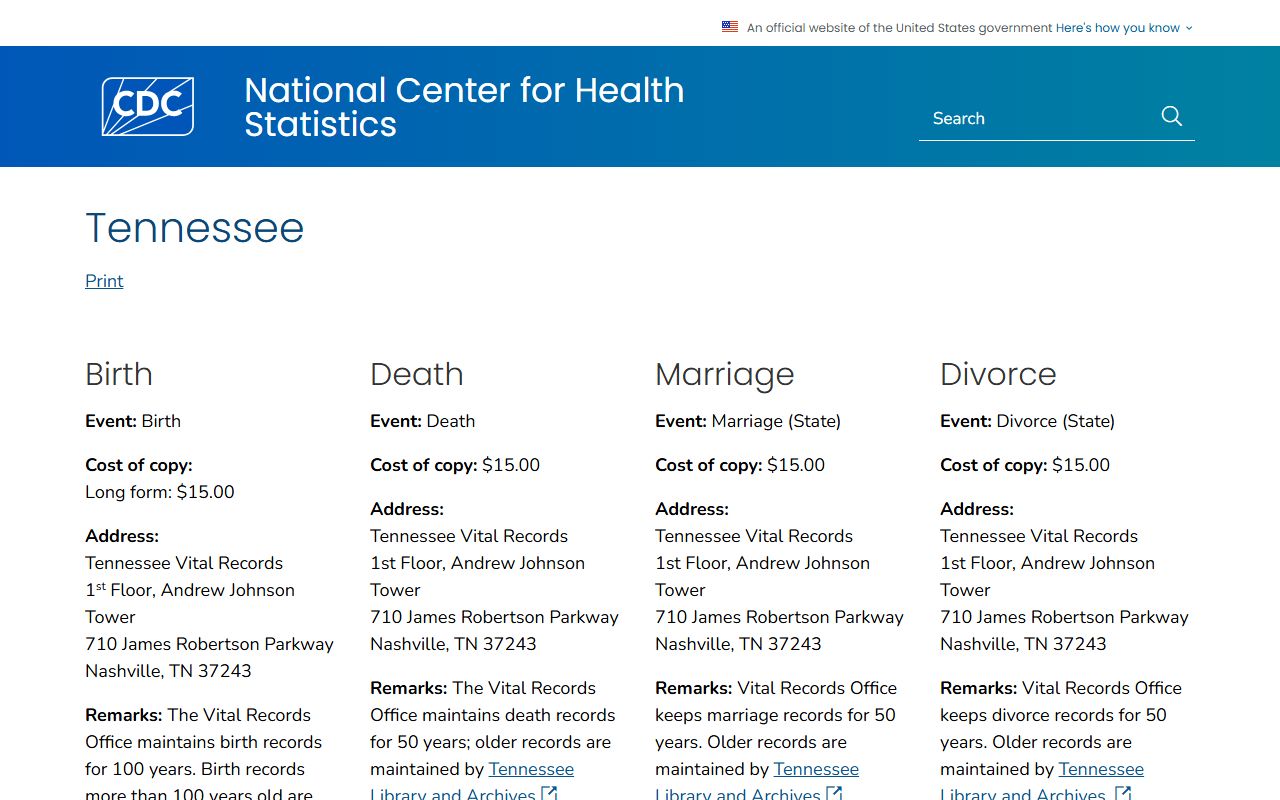
It gives Tennessee searchers a second authoritative reference when they want to confirm ordering details before mailing a request.
Tennessee Dissolution Of Marriage Certificates
Tennessee certificates are narrower than court decrees. A certificate confirms the divorce, the parties, the date, and the county. It does not usually give the full terms of the case. That distinction matters when a bank, court, title company, or family record search needs the actual judgment language. In that situation, the county clerk for the court file is the better Tennessee source.
The research also gives clear ordering details for Tennessee. Requests may be made in person in Nashville, by mail, through local health departments for some services, or online through VitalChek, which the state identifies as its approved vendor for credit and debit card processing. Tennessee requires a photocopy of a signed government ID with requests. Mail requests are paid by check or money order to Tennessee Vital Records. If a Tennessee record is not found, the search fee still applies and the requester receives a no-record-found letter.
Tennessee fee details are also reflected in Tenn. Comp. R. & Regs. 1200-07-01-.13, which covers certified and uncertified copies, supporting documents, and search charges tied to Tennessee vital records work.
The Tennessee fee regulation page at Cornell Law School supports the certificate and search fees tied to Tennessee Dissolution Of Marriage records.
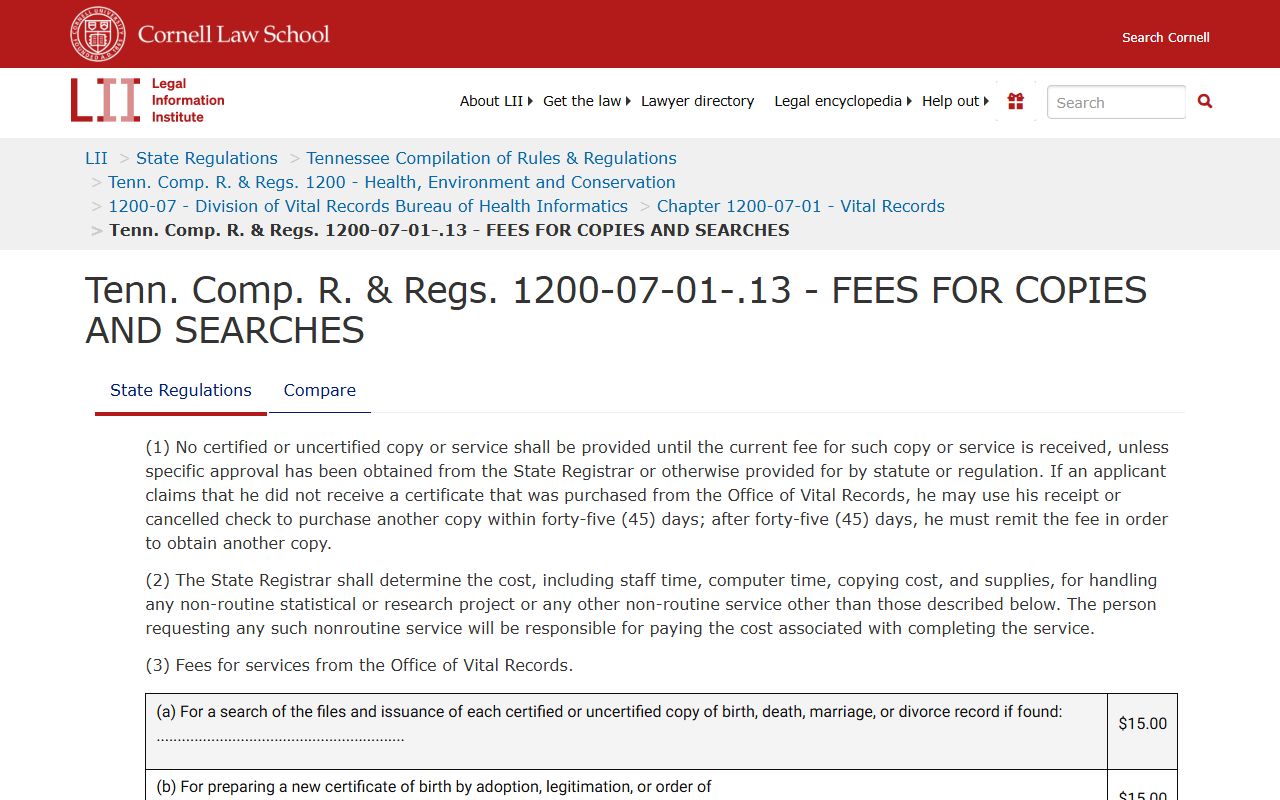
It helps Tennessee users confirm that a search fee applies even when the state cannot locate the certificate.
County Courts And Tennessee Records
Tennessee courts handle divorces at the trial court level. The research notes that Circuit Courts and Chancery Courts have concurrent jurisdiction over divorce actions in Tennessee. Some counties lean more heavily on one court than the other. Some use both. That is why a county page on this site points first to the local court office, not the city hall. City offices may offer guidance, but Tennessee Dissolution Of Marriage records are mainly county court records.
The Tennessee Court System is useful for court structure, official forms, and some county case access routes. It is also where Tennessee users can find court-approved divorce materials, self-help information, and links back into clerk offices. In practice, a Tennessee search works best when you gather both spouse names, an approximate filing year, and the county. That small set of facts often gets a clerk to the right file faster.
The official Tennessee Court System site is a core Tennessee Dissolution Of Marriage resource because it explains court jurisdiction and connects users to state-approved forms and county court information.
Use it to confirm whether a Tennessee county routes family cases through Circuit Court, Chancery Court, or both.
Tennessee Dissolution Of Marriage Rules
Tennessee users often need the law mixed into the search process, not parked in a separate code section. The core grounds and waiting periods come from Title 36, Chapter 4 of the Tennessee Code. The research highlights two points that shape records access and timing. Tennessee recognizes both fault and no-fault divorce grounds, and Tennessee requires a waiting period of 60 days when there are no minor children and 90 days when there are minor children. Those case rules help explain why some Tennessee records remain pending for a period even after filing.
The same Tennessee code chapter also covers residence rules and property division concepts tied to divorce litigation. The research points to T.C.A. § 36-4-104 for residency and T.C.A. § 36-4-121 for equitable distribution. Those legal points matter because they affect where a Tennessee case can be filed and what may appear in the record once the decree is entered.
The Tennessee statutes page at Justia is a strong state-level source for grounds, waiting periods, residency, and property rules behind Tennessee Dissolution Of Marriage case records.
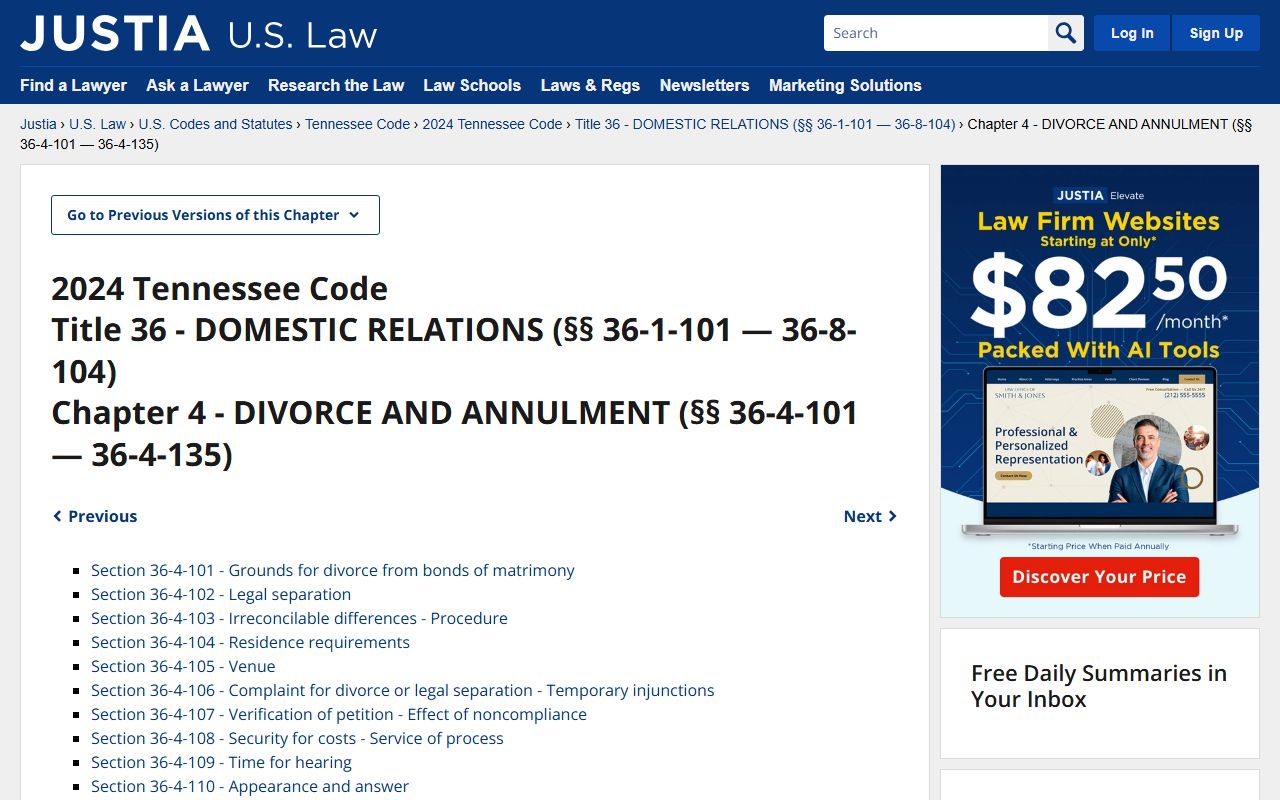
That legal context helps explain why a Tennessee court file may include custody forms, agreements, or proof tied to a specific ground.
Older Tennessee Dissolution Of Marriage Files
Older Tennessee records move into a different search channel. After 50 years, divorce records held by the state are transferred to the Tennessee State Library and Archives. That archive is a strong fit for family history work and for older Tennessee Dissolution Of Marriage searches that no longer belong in current vital records custody. The research notes that the archives keep older divorce material, offer reading room access, and maintain broad Tennessee collections in books, microfilm, manuscripts, and other historic formats.
For very old Tennessee cases, the research also points to the BYU Tennessee guide, which notes that divorces in the early 1800s could be granted by the legislature, circuit courts, and county courts. That means a historical Tennessee search may cross more than one record series. Old Tennessee Dissolution Of Marriage work can be slower, but the archive path is still clear once the age of the record is known.
Forms And Public Access In Tennessee
Tennessee also provides practical tools for people who are trying to file or understand a case. The Tennessee Supreme Court approved divorce forms page explains agreed divorce packets for qualifying Tennessee couples. The research makes the limits clear. Those forms are aimed at uncomplicated agreed divorces and come with eligibility rules about children, property, businesses, and retirement assets. Even if someone is not filing, those form packets can help a Tennessee searcher identify the names of documents likely to appear in a court file.
Access rights are shaped by the Tennessee Public Records Act guidance from the Office of Open Records Counsel. The research notes that Tennessee citizens have the core inspection right, that inspection is usually free, and that a records custodian must act within seven business days when prompt production is not practical. Those Tennessee rules matter more for county court files than for state-issued certificates, but they help explain response timing and copy practices for Tennessee Dissolution Of Marriage requests.
The Tennessee Supreme Court forms page at tncourts.gov shows the approved documents tied to agreed Tennessee Dissolution Of Marriage filings.
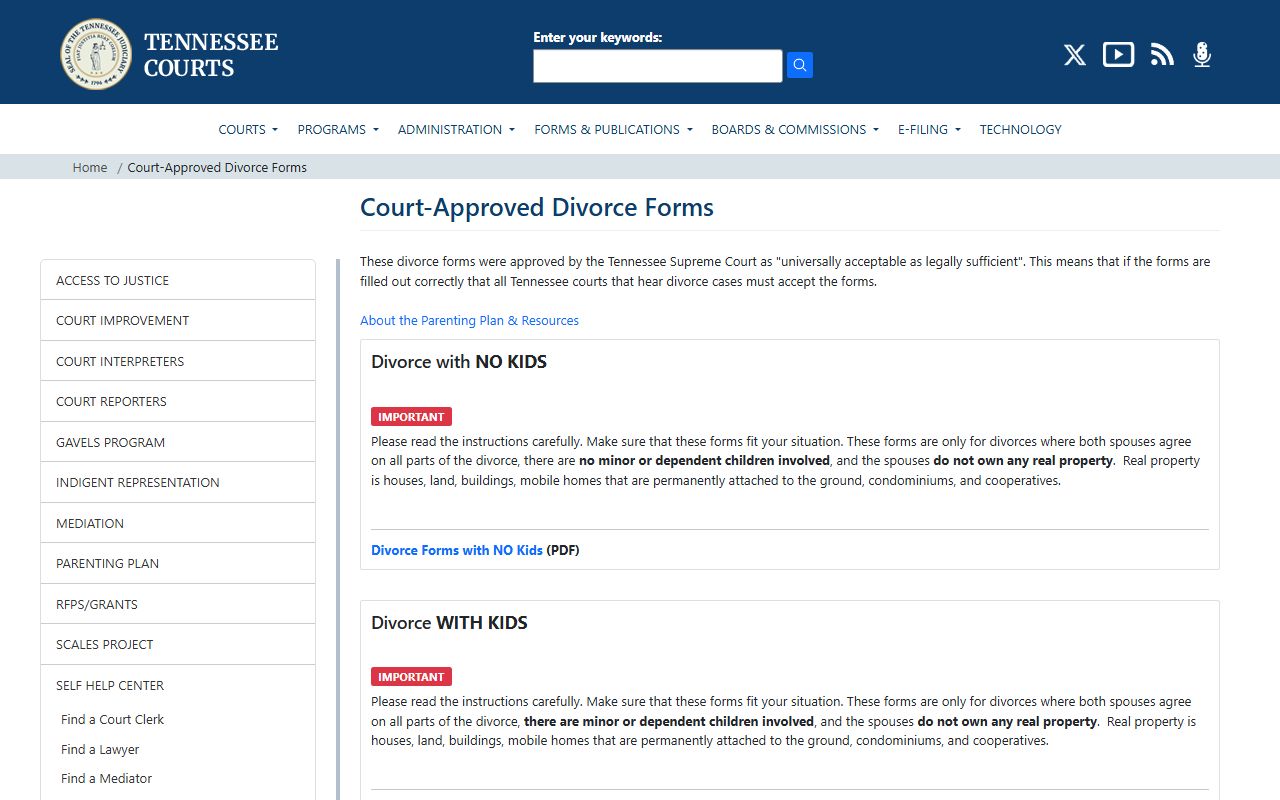
Those Tennessee forms give record searchers a practical checklist of documents that may appear in an uncontested court file.
Tennessee Legal Help And Record Requests
Not every Tennessee user is just browsing. Some need to request a record while handling a live case. Some need help reading what they find. The research points to the bar resource page cited in the project research and to legal aid resources referenced through county and city sections. Those sources are useful when a Tennessee Dissolution Of Marriage search becomes a larger legal problem involving proof, filing status, or self-help forms.
The Tennessee public access page at the Office of Open Records Counsel is also worth keeping in view. It explains who may inspect, how agencies respond, and what copy costs can apply outside the vital records certificate structure.
The Tennessee Open Records Counsel page at comptroller.tn.gov gives statewide access guidance that can support Tennessee Dissolution Of Marriage record requests made to county offices.

That Tennessee guidance is especially useful when a county office needs time to produce a file or explain a denial.
The Tennessee bar-related resource used in the research at knoxbar.org adds practical background on Tennessee divorce grounds and evidence issues.
It is a useful Tennessee support link when a search turns into a filing or legal interpretation problem.
Tennessee County Pages
Tennessee Dissolution Of Marriage records stay local first. Browse the county directory to reach the court offices, archive notes, and source links tied to each Tennessee county.
Tennessee City Pages
City pages explain the county connection for Tennessee Dissolution Of Marriage searches and point readers to the court office that actually keeps the record.