
Search Bedford County Dissolution Of Marriage
Bedford County Dissolution Of Marriage records are worth a careful search because the county has older files, a clear courthouse history, and a few different places where the paper trail can land. Some records are at the Circuit Court Clerk office in Shelbyville. Older marriage and history material can also point you toward the county clerk and the Tennessee State Library and Archives. If you know the names and rough dates, you can move between those sources in a smart order and avoid wasting time on the wrong office.
Bedford County Quick Facts
Bedford County Dissolution Of Marriage Records
Bedford County divorce research starts with the Circuit Court Clerk at 1 Public Square in Shelbyville. The clerk maintains divorce records, and the county notes that divorce records date from 1864. That makes Bedford County useful for older family research as well as present-day case lookups. If you only need a certificate, the state vital records office can also help, but the county file is still the best place to find the full case history. The courthouse in Shelbyville has seen damage from tornadoes and fires, so the record trail is more important here than in many counties.
Bedford County Circuit Court Clerk is the main office for divorce files, and the Bedford County government site is the best official county resource for current contact information. The county clerk also keeps marriage records from 1863, which can help you prove the marriage that came before the divorce. That is useful when a divorce file is incomplete or when a later probate file refers back to the marriage.
Bedford County history is part of the search too. The courthouse had tornado damage in 1830, fire damage in 1863, and fire damage again in 1934. Those losses do not erase the county record system, but they do explain why one office may not have everything you expect. If a local file is thin, the Tennessee State Library and Archives may have the older material or a useful backup copy.
The Bedford County Circuit Court Clerk page matches the courthouse office where current divorce files are kept.
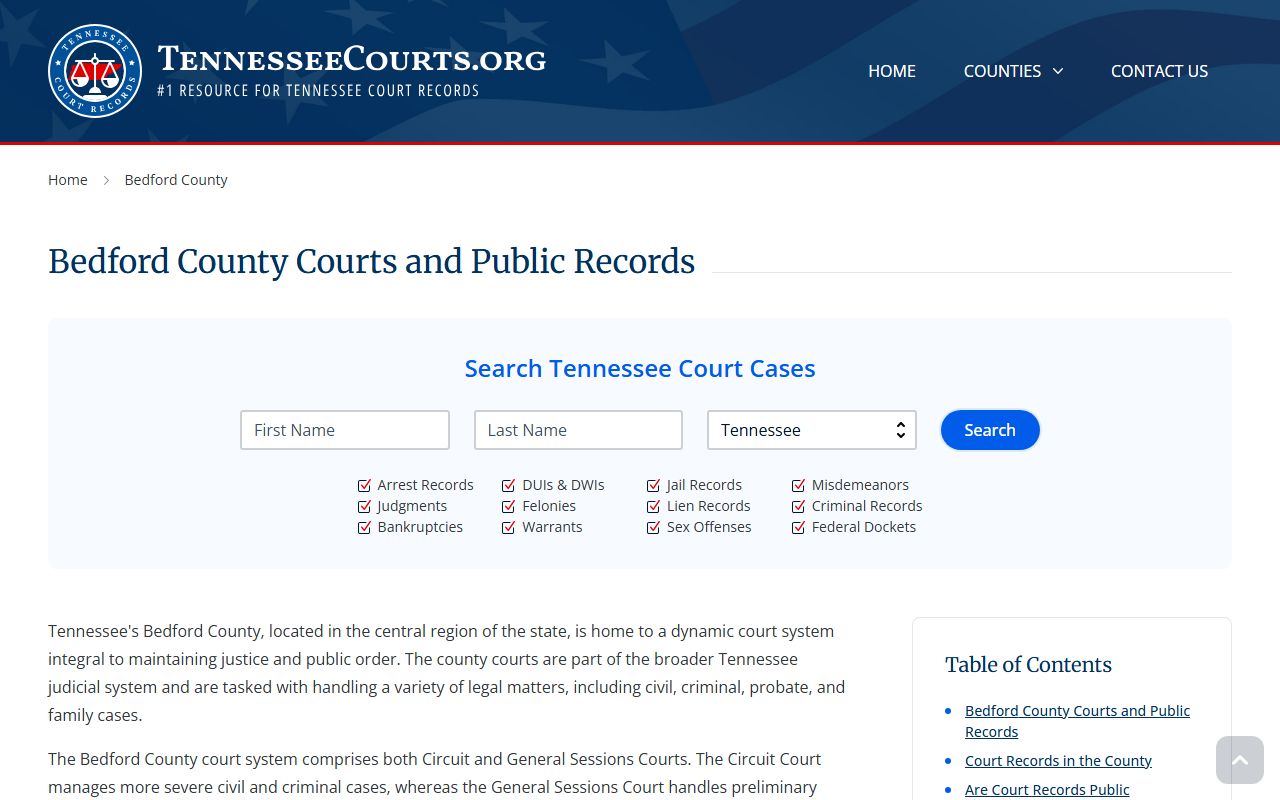
That is the first stop for recent filings, copies, and docket questions in Shelbyville.
How to Search Bedford County Dissolution Of Marriage
Bedford County does not currently offer a full online divorce record search. That is the key fact to keep in mind. If you want details beyond a simple docket check, you should plan on an in-person visit or a mail request. The Circuit Court Clerk can still help you search by name or case number, but you need to start with the local office if you want the most complete result.
The county and state sources work best together. The courthouse handles the file. The Tennessee Court System explains the legal path. The Tennessee State Library and Archives can help when you need older material or a backup trail for records that no longer sit in the courthouse. Bedford County research gets easier when you move from the most recent office back toward the older record source instead of the other way around.
To search a Bedford County Dissolution Of Marriage record, gather these basics first:
- Full names of both spouses
- Approximate year of the divorce
- Case number, if known
- Whether you need a certificate or the full court file
Older Bedford County records are more likely to take time. That is normal. Fire loss and courthouse damage mean a clerk may need to look in more than one place. Ask whether the file is in the courthouse, at the archive, or with the state records office before you assume it is missing.
The Tennessee Court System is a good guide when you want to understand what the clerk is looking for. It explains how Tennessee courts handle divorce cases and helps you see how a local Bedford County file fits into the larger state system.
Bedford County Dissolution Of Marriage Filing Process
Filing a divorce in Bedford County means starting with the local Circuit Court Clerk and following Tennessee law. The complaint opens the case, and the clerk assigns the docket. If the case is agreed, the parties can use the approved divorce forms. If it is contested, the court file may grow with motions, notices, and orders before the final decree is entered. The county office is the place where those papers first become part of the public record.
Tennessee divorce rules come from Title 36, Chapter 4. The residency rule is set by state law, and the waiting period depends on whether the case involves minor children. That means Bedford County residents still need to meet the state rule even though the filing goes through a county clerk. The local office can process the case, but the state law controls the legal path.
Service is the next step. The other spouse must receive the papers. Once service is complete, the file may include a return of service, an agreement, and later the final order. If the case is uncontested, the paperwork may be shorter. If there is a dispute, the file can grow fast. Either way, the clerk keeps the record trail that proves what happened.
The Tennessee Supreme Court divorce forms page is useful for people who want to file on their own. It shows the approved packet for agreed cases and gives the clearest path for a simple divorce. That resource can save time when you are trying to prepare a Bedford County filing without guessing at the forms.
Note: Keep your names and dates consistent across the complaint, service papers, and final decree, because Bedford County clerks may need to trace each version of the file later.
What Bedford County Dissolution Of Marriage Files Show
Bedford County divorce files usually hold the same core papers you would expect in any Tennessee case, but the older history makes them more interesting. You may see the complaint, the response, a marital agreement, service papers, and the final decree. If the case was filed long ago, you may also find related court minutes or record references in county history sources. Those extra records matter because Bedford County has a record of courthouse damage and loss.
The county clerk maintains marriage records from 1863, and that can help you connect the divorce back to the marriage itself. When a divorce file is incomplete, a marriage record can still confirm names, dates, and family lines. For older records, the Tennessee State Library and Archives is often the best backup source. That is especially true when you are tracing material that predates modern courthouse filing systems.
The Tennessee State Library and Archives has long collected Tennessee history, and Bedford County researchers often use it when county papers are hard to reach. The state archive also helps with family research and older court material. That gives you a second path when the county file is thin or when you need a broader historical view.
The Tennessee Office of Vital Records page is the state source for divorce certificates and other certified vital records.
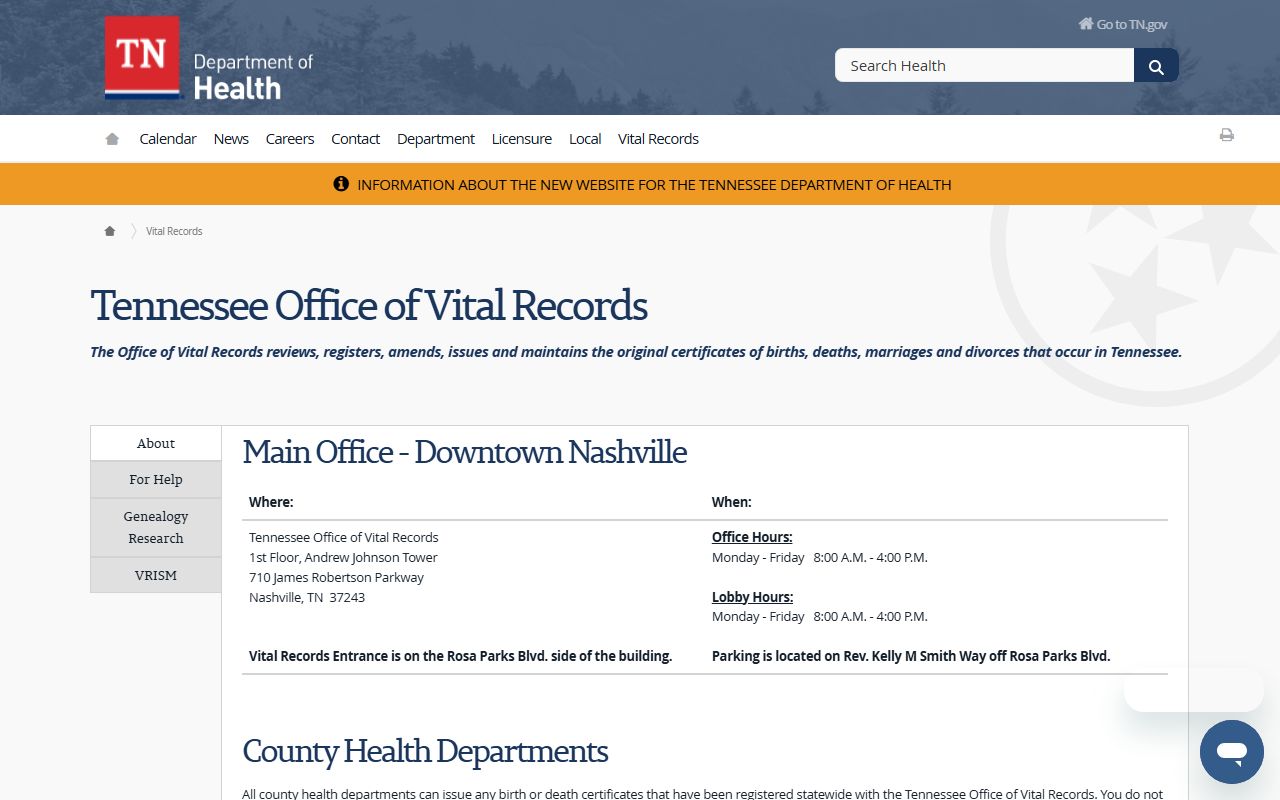
Use the state office when you need a shorter certificate instead of the complete county file.
The Tennessee Public Records Act guidance helps explain how Bedford County public access requests should move when a file is not on the counter.

It becomes especially useful when a courthouse file is old, damaged, or hard to locate in Shelbyville.
Bedford County Dissolution Of Marriage Fees and Copies
Bedford County copy fees can change, so the safest move is to call the clerk first. The research notes that court record copies should be confirmed with the clerk and that certified copies cost extra. For state certificates, Tennessee Vital Records charges $15 per copy. That is a simple fee, but it only covers the state certificate. It does not replace the county divorce file.
Mail requests usually need payment by check or money order. If you request a certified county copy, ask whether there is an added charge per document. The county research says certified copies cost an additional $5 per document. That is helpful when you need a clean record for name changes, court use, or another official file.
The Tennessee fee regulation schedule helps explain why the search charge and copy charge are often tied together. A search can still cost money even when no record is found. That is one reason Bedford County researchers should gather the best names and dates before they send a request.
When you compare costs, remember the difference between a certificate and a decree. A certificate is shorter and easier to order. The decree is the full legal record. If you need the terms of the divorce, the county file is the stronger choice.
Public Access to Bedford County Dissolution Of Marriage
Bedford County divorce records are generally public, but the route to them is not the same as it is in a county with a big online portal. That means you may need to visit Shelbyville, mail a request, or ask the clerk for help with an older file. Public access still exists, but it is not always fast. The county history and record loss help explain why.
Tennessee Public Records Act guidance sets the tone for most public requests. If a record is not ready right away, the custodian should act within seven business days. That is a useful baseline when you are waiting on a Bedford County file. It also means you can ask for a written denial or a time estimate if the office needs more time.
Not every line in the file will be public. Financial account numbers, Social Security numbers, and some child-related information may be hidden. The rest of the file is usually still available. If you need a clean public copy, ask what can be released and whether a certified version is the better option.
Note: Bedford County research often starts with a public request and ends with a court copy, so keep both options in mind if the first search does not answer your question.
The Tennessee Court System is also useful here because it shows how county courts handle divorce actions and public case information across the state.
Legal Help for Bedford County Dissolution Of Marriage
If you are filing in Bedford County without a lawyer, the approved state forms are the best place to begin. The Tennessee Supreme Court divorce forms page shows the agreed divorce packet and the order of the papers. That matters when you want a clean county file and do not want to miss a required form.
The local court office can tell you where to file and what the clerk can copy, but it cannot give legal advice. That is where the state court site helps. It gives you the structure, the forms, and the court path. If you need a lawyer, you can also use the Tennessee Bar Association referral resources or ask a local attorney who handles family law in Bedford County.
Bedford County cases often involve old marriage records as well as modern divorce files. That means a legal question can turn into a records question. The county clerk, the Circuit Court Clerk, and the Tennessee State Library and Archives can all play a role in the same search. Knowing that up front saves time and keeps the search more focused.
The county government site is a good backup when you need office contacts or courthouse basics. It is also the best official place to confirm which county department you should call before you drive to Shelbyville.
Related Bedford County Records
Bedford County marriage records, court minutes, and older county history often help explain a divorce file. Marriage records go back to 1863, which is useful if you need to show when the marriage began. The county also has early court records and a long memory of courthouse damage. Those details matter because older divorce files may point to another record set before they reach the final decree.
If the courthouse copy is incomplete, ask whether the state archive has a backup. If you only need proof that the divorce happened, the state certificate may be enough. If you need the terms, the county decree is better. The right answer depends on what you are trying to prove.
Bedford County works best when you search in layers. Start local. Check the state certificate. Then move to the archive if the first two steps do not give you the full answer.