
Search Blount County Dissolution Of Marriage
Blount County Dissolution Of Marriage records are split between the county courts and the Tennessee vital records system. If you need a full case file, the county office is the first stop. If you only need a short certificate, the state office may be easier. Blount County also offers an online court records search for newer cases, which helps when you want basic docket details before you call or visit. Maryville is the county seat, so most searches start there. The process is plain once you know which record you need and which office keeps it.
Blount County Quick Facts
Blount County Dissolution Of Marriage Records
Blount County keeps divorce work in two court homes. The Blount County Circuit Court Clerk and the Blount County Chancery Court both handle dissolution records. The county research notes say the Circuit Court Clerk maintains divorce records, while the Chancery Court also hears divorce matters. That split matters when you try to pull a file or ask where a decree was entered. The county online court records search only reaches cases filed from August 1, 2019 to the present, so older files still need a clerk request or an in-person visit.
The online portal gives a useful start. It can search by case number, party name, or filing date range. Results show the case number, filing date, case type, party names, case status, and basic docket information. The portal does not show complete files, sealed records, financial details, or exhibits. That means you can confirm a case exists, then move to the clerk for the papers you really need. If you want the county office pages, use Blount County Circuit Court Clerk and Blount County Chancery Court as your local contact points.
The county records management clerk also takes requests for copies. That office is at 926 East Lamar Alexander Parkway in Maryville and uses a Circuit Records Request form. The form asks for contact details, case details, and the type of records you want. That is the cleanest route when you need a certified copy, a paper file, or older documents that never made it into the search portal.
The Tennessee Court System page at tncourts.gov helps show where Blount County Dissolution Of Marriage records connect to county court files. It is a good cross-check when you need to confirm whether a matter belongs in Circuit Court, Chancery Court, or the state vital records system.
Note: The online search is handy for quick checks, but it is not a full case file. For the complete record, ask the clerk for the paper file or certified copy.
The state court image below points back to tncourts.gov and is a useful reminder that county records sit inside Tennessee's broader court system.
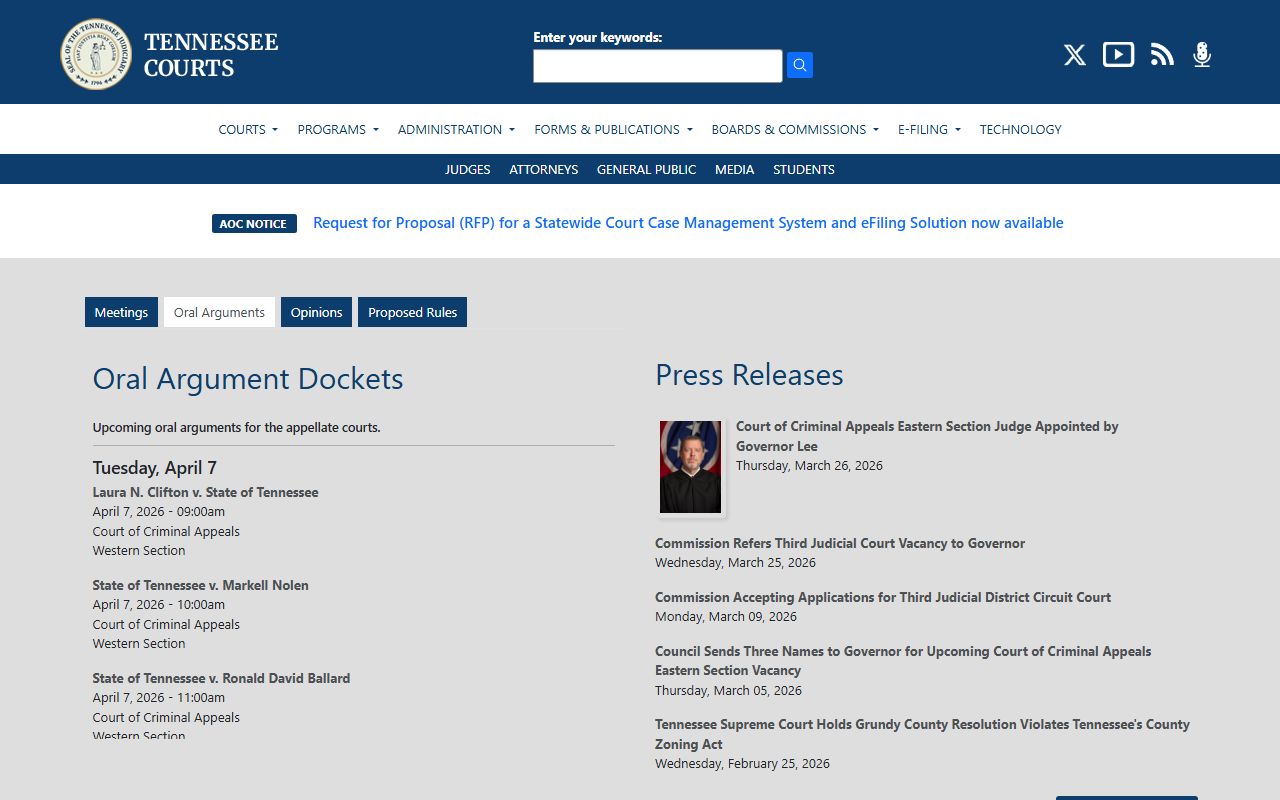
That image fits the local process well because Blount County records are tied to both the county clerk offices and the statewide court system.
How to Search Blount County Dissolution Of Marriage
Start with the online portal if the case is new enough. Search by party name, case number, or date range. That often tells you which office has the file and whether the case is active, closed, or sealed. A clean search saves time. It also keeps you from calling the wrong desk. If you only know one spouse's last name, that can still be enough to start.
Once you have a lead, use Tennessee court rules to guide the next step. The state divorce statute at T.C.A. § 36-4-104 covers residency, while T.C.A. § 36-4-101 sets the grounds and the wait time. If the divorce involved no minor children, the court cannot hear the case until 60 days have passed. If the couple had minor children, the wait is 90 days. Those dates shape the docket and help explain why a file may not be final yet.
You can also use the Tennessee Public Records Act to frame a request. The comptroller's open records page at comptroller.tn.gov explains that records should be made available promptly when possible. That matters if you need a copy and the clerk has to search older material. For Blount County, the file may be in court storage rather than on the web, so a clear written request can be the fastest path.
- Use the spouse's full name if you have it.
- Add the case number if one is known.
- Include a filing date range when you can.
- Ask for the decree if you need proof of the divorce.
- Ask for the full file if you need the pleadings or exhibits.
The Tennessee Supreme Court approved divorce forms at tncourts.gov can help you recognize the papers inside a Blount County file. Those forms show the same names and case details you may see in the court record, which makes a search easier.
Note: A basic portal search tells you where to look next. It rarely replaces the actual court file when you need a certified copy or the full history of the case.
Blount County Dissolution Of Marriage Case Files
Blount County divorce files can be detailed. The research notes list the petition for divorce, summons, answer, marital dissolution agreement, parenting plan, financial affidavits, final decree, certificate of divorce, temporary orders, motions, responses, transcripts, exhibits, child support worksheets, and QDROs. That is a lot of paper. It is also why a county file is often more useful than a short certificate from the state. If you are sorting property, custody, or support issues, the court file usually gives you the fuller story.
The Circuit Court Records Management Clerk handles records requests at 926 East Lamar Alexander Parkway in Maryville. The office phone is (865) 273-5400, the email is bccc@blounttn.org, and the fax is (865) 273-5411. The request form asks for your phone number, email address, case names, dates, and the type of records you want. Keep the request tight. Clear details help staff find the right file fast.
Copy costs are simple in Blount County. Regular copies are $0.50 per page. Certified copies are $5.00 plus $0.50 per page. If you only need to check a file in person, the research notes say inspection is free during business hours. Public access terminals at the courthouse and the Blount County Public Library can also help when you are trying to pin down a case before you order copies.
The county page for circuit court records is the main place to start when you need a full file. If you know the case is in Chancery Court, use the chancery office too. Blount County has both courts, and the office you choose can change how fast you find the file.
Blount County Dissolution Of Marriage Certificates
The state vital records office keeps Tennessee divorce records for 50 years. After that, older records move to the Tennessee State Library and Archives for public research. For a Blount County record, that means the state office is the place to go when you only need a certified certificate and not the whole court file. The Tennessee Department of Health explains the process at tn.gov. The CDC summary at cdc.gov says the request must include a copy of a valid government ID with the requestor's signature.
The certificate is shorter than the decree. It shows the names, date, place, case number, court, and final date of divorce. That is enough for some uses, such as a quick proof of status. It does not give you the whole set of pleadings or the settlement terms. If you need the terms of the divorce, you still want the county file. If you need a certificate from the state, the fee schedule at law.cornell.edu confirms that a search and copy fee applies even when the record is not found.
The state office also uses VitalChek as the online vendor, and the records office accepts mail and in-person requests. That gives you more than one route. It also gives you a way to work around county storage delays when you only need the state certificate.
Note: The state certificate is useful, but it is not the same as the Blount County decree. If you need the terms of the divorce, ask the county clerk for the case file.
Public Access for Blount County Dissolution Of Marriage
Public access rules matter because they tell you what the clerk can share. The Tennessee Public Records Act at comptroller.tn.gov says public records should be made available when the request can be handled promptly. In Blount County, that often means you can inspect a divorce file in person, then ask for copies of the pages you need. The research notes also point out that sealed or confidential records are excluded from the online portal, so a missing case on the web does not always mean the record is gone.
The Tennessee Supreme Court approved forms at tncourts.gov are helpful here too. They show how an agreed divorce file is built and what papers are usually inside. That matters when you are trying to confirm whether a decree should exist, or why a file has a parenting plan, financial affidavits, or a marital dissolution agreement.
For older Blount County material, the county public library can help with internet access and basic research. The library does not replace the clerk, but it can help you find the right case number or date before you make a request. If you are working on a family history project, that can save time.
The Tennessee Bar Association domestic relations resource page at knoxbar.org also helps explain the legal side of a Blount County divorce. It discusses grounds for divorce, evidence, and the way Tennessee courts handle proof in domestic cases. That is useful when a file seems thin or when you are trying to understand why the decree looks the way it does.
Note: Online access helps with quick checks, but the county clerk still controls the full record. For old files, in-person review is often the most direct route.
Help With Blount County Dissolution Of Marriage
If you are trying to file or read a divorce record, the county court office is only part of the path. The Tennessee Courts site at tncourts.gov gives you forms, the approved divorce packet, and general filing guidance. That makes it easier to match the papers in your case to the papers the court expects. It also helps if you need to compare a live file with the state forms packet.
The county offices can still answer the practical questions. The Circuit Court Records Management Clerk can tell you what the request form needs. The Chancery Court can confirm whether a file belongs there. The state vital records office can tell you whether a certificate is the better fit. Those are small questions, but they matter when you are trying to avoid a second trip or a wrong fee.
Legal aid and lawyer referral resources are useful when the file shows more than a simple agreed divorce. The Tennessee Bar Association domestic relations page gives a plain reminder that grounds for divorce matter, evidence matters, and some defenses still apply. If a file is old, contested, or hard to read, that background can help you make sense of the record.