
Dickson County Dissolution Of Marriage
Dickson County Dissolution Of Marriage records usually start with the county court that heard the case and end with the decree or certificate you need to prove the divorce. Charlotte is the county seat, and that matters because local court work in Dickson County is tied to the office that serves the seat. If you know the spouse names and a rough filing year, you can usually move faster. Recent requests often begin with the county clerk or the state vital records office, while older records may point to the archive path that keeps Tennessee history in order.
Dickson County Quick Facts
Where To Find Dickson County Dissolution Of Marriage Records
The county court page at tennesseecourts.org/dickson-county is the best local starting point for Dickson County Dissolution Of Marriage records. The research says the Circuit Court Clerk is the official custodian, and the Chancery Court handles divorce proceedings. That means the right office depends on the record you want. A full court file is different from a state certificate. If you need the decree, filings, or case papers, the county route is the one to follow. If you only need proof that a divorce was recorded, the state route may be simpler.
Dickson County was created in 1803 from Montgomery and Robertson Counties. That history matters when you are dealing with older files or with family records that stretch back across county lines. The research also notes that a county clerk marriage record set goes back to 1854, which can help anchor the marriage before the dissolution. Dickson County researchers sometimes also use the Ancestry divorce index noted in the research, which is listed as covering 1849 to 1932. It is a useful clue when the courthouse file is not the first lead.
The Dickson County court page is the cleanest way to confirm the current office path for a Tennessee dissolution search.
The local Dickson County court page helps you confirm which office is handling the case before you make a request.
How To Search Dickson County Records
Good searches start with the basics. Use both spouse names if you have them. Add the filing year or a narrow range. If you know whether the case was agreed or contested, say that too. Dickson County records can move faster when the clerk has a short request and a clear timeline. You can search in person, by phone, or by using the local court resources linked through Tennessee court pages. The state office can also help when you need a certificate rather than the full divorce file.
The Tennessee Supreme Court approved forms page at tncourts.gov/node/622453 is useful because it shows the documents used in agreed divorces. That matters in Dickson County because an agreed case may leave a slimmer paper trail than a contested case. If you are trying to see what should be in the file, the forms packet gives you a good clue. It also helps you know whether a marital dissolution agreement, hearing notice, or final order should be part of the record you are asking for.
If you are calling or visiting, keep the request tight. A short request is easier to process and easier to verify.
Dickson County Dissolution Of Marriage Files
A Dickson County divorce file can include more than the final decree. The complaint starts the case. The answer or response comes next. If the spouses agreed, the file may include a marital dissolution agreement and other forms tied to custody, support, or property. If the case was contested, the file may be larger and include motions, notices, and court orders. That is why the full county file is often more useful than a short state certificate when you need the details behind the divorce.
Tennessee divorce law is found in Title 36, Chapter 4 of the Tennessee Code. The research highlights the grounds for divorce, the residence rule, the waiting period, and the equitable property rule. Those rules shape the paper trail that ends up in Dickson County files. A case based on irreconcilable differences will look different from one based on fault grounds. That difference matters when you are trying to tell which papers should exist in the record and which court office should have them.
Dickson County records are useful because they can show the whole path from filing to decree, not just the final result.
State Sources For Dickson County Records
The Tennessee Office of Vital Records at tn.gov/health/health-program-areas/vital-records.html is the official statewide source for a certified Tennessee divorce certificate. The research says Tennessee keeps divorce records there for 50 years, and then older records move to the Tennessee State Library and Archives. That makes the state office the right choice for a recent certificate, while TSLA becomes the better path for older historical work. The state office is also where you can confirm ID rules, payment methods, and whether a no-record search still carries the fee.
The CDC Tennessee guide at cdc.gov/nchs/w2w/tennessee.htm matches the same retention and ordering basics. It is helpful when you want a second official summary before you mail a request or decide whether a Tennessee record exists at all. For older cases, the Tennessee State Library and Archives at sos.tn.gov/products/tsla is the main archive stop. The research notes that TSLA holds older divorce records, plus microfilm and other historical materials that can help with Tennessee family history work.
Note: If the divorce did not happen in Tennessee, the Tennessee office will not issue the record, so the search has to move to the state where the event occurred.
The Dickson County record trail is usually county first, state second, and archive third.
The state certificate path is the simplest way to confirm a recent Dickson County divorce.
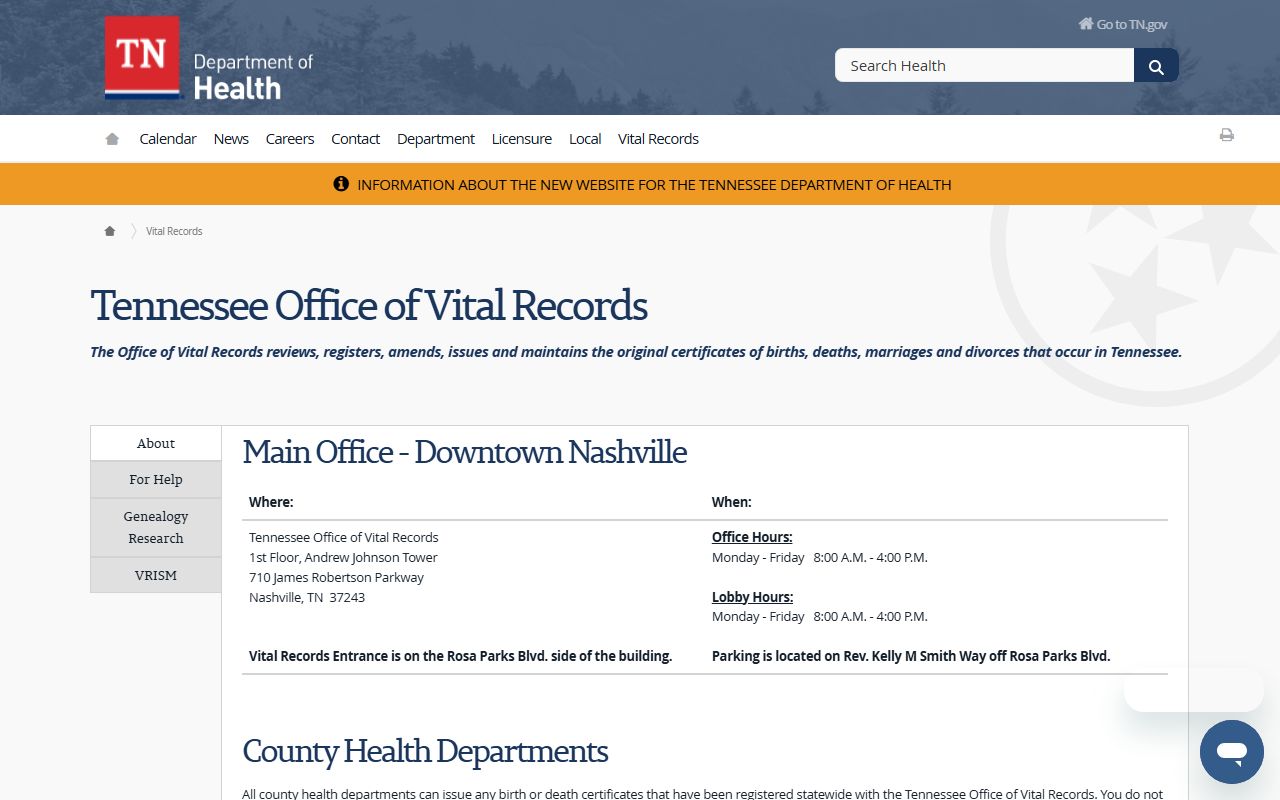
That statewide certificate page is the right place when you need proof of the divorce rather than the complete county case file.
Dickson County Dissolution Of Marriage Copies
Requests for Dickson County copies should be direct. The research says valid identification must accompany Tennessee vital records requests, and county offices also want a proper request form and current fees. If you are ordering a state certificate, the fee schedule in Tenn. Comp. R. & Regs. 1200-07-01-.13 sets the search and copy fee. That rule matters because the fee can still apply even if the record is not found. It is a paid search, not just a copy charge.
For Dickson County court files, ask the clerk whether you need a plain copy, a certified copy, or a file pull from an older storage location. That small detail can save time. The county office may also explain whether the office can search by name, year, or case number. If you are working from a family note or a rough date, give the clerk whatever you have. The clearer the request, the faster the clerk can match the file to the right person and the right year.
Copy requests are best when they match the exact record type you want.
Public Access And Court Rules
The Tennessee Public Records Act guidance at comptroller.tn.gov/office-functions/open-records-counsel/ explains how public record requests work in Tennessee. Most county divorce files are public, but some parts can be sealed or redacted. That is normal when child information or private financial data is involved. The law also gives the records custodian a seven business day window to act when prompt production is not practical. That means a request may take time, but it should not disappear.
Tennessee divorce law also shapes the timing and contents of the file. The waiting period is 60 days when there are no minor children and 90 days when there are minor children. The Tennessee court system at tncourts.gov gives the statewide structure and the approved forms that help people file the case. If you need help sorting out a filing path or a form set, the Tennessee bar resource at knoxbar.org is one of the research links that can point you toward domestic relations help and related support.
Even when access is public, the exact paper set can change from one Dickson County case to the next.
Dickson County Record Clues
Local clues often make the search faster. Dickson County marriage books go back to 1854, so the marriage itself may be easier to confirm than the later divorce. That is useful when you are building a timeline or when a divorce file is incomplete. The county seat, Charlotte, is also a practical anchor for older requests because local office work usually ties back to that town. Those small details matter when the record is old, the spelling is uncertain, or the spouse name changed over time.
The county court page, the state vital records office, and TSLA work together as a three-step path. Court office first. State certificate second. Archive third. That pattern is consistent across Tennessee and it is especially helpful in Dickson County when the record sits in a mixed lane. If you know the marriage year, the county seat, and the filing year, you already have most of what the clerk needs to start. That is often enough to get from a family clue to a usable record copy.
Note: Dickson County older divorce material may live in archive collections even when the courthouse file is no longer active.