
Fayette County Dissolution Of Marriage
Fayette County Dissolution Of Marriage records are best traced through the county court in Somerville, which is the county seat and the main local anchor for divorce file work. If you need the full case file, the county office is the place to start. If you only need proof that the divorce happened, the Tennessee Office of Vital Records may be enough. Fayette County marriage records also go back to the early 1800s, which makes the county a good place to connect a marriage date with the later dissolution record. A clear name and a rough year can save a lot of time.
Fayette County Quick Facts
Where To Find Fayette County Dissolution Of Marriage Records
The county court page at tennesseecourts.org/fayette-county is the main local lead for Fayette County Dissolution Of Marriage records. The research says the Circuit Court Clerk is the official custodian and the Chancery Court handles divorce proceedings. That means the courthouse file is the first record to chase when you need the decree, the filings, or the support papers. A state certificate is a shorter record. It proves the divorce happened, but it does not replace the complete county file when you need the full story.
Fayette County was created in 1824 from Indian lands, and the county seat is Somerville. Those facts help when you are searching older records because the county history and the courthouse location both shape where the papers were kept. The research also says the county clerk has marriage records from 1825. That is useful because the marriage record can give you the starting point for a later dissolution search. If you already know the marriage existed in Fayette County, it is easier to narrow the divorce timeline.
The county court page is the best first step for checking the current Fayette County file path.
The Fayette County court page tells you where the local divorce record work begins.
How To Search Fayette County Records
Fayette County searches work best when the request is specific. Use the spouse names if you know them. Give the filing year if you have it. If the divorce was recent, ask the county clerk about the court file first. If you only need proof that the marriage ended, the state certificate is the simpler route. The clerk can often tell you whether the record is active, archived, or better searched by another office. A short, clear request is easier for the office to process.
The Tennessee Supreme Court forms page at tncourts.gov/node/622453 is useful because it shows the forms used in agreed divorces. That matters in Fayette County because agreed cases can leave fewer papers than contested ones. If you know the case was uncontested, look for a marital dissolution agreement and a final order. If the case was contested, expect a larger file with more motions and hearing papers. The form packet helps you understand what should be there before you ask for copies.
Strong search details make the office work easier and reduce back and forth.
Fayette County Dissolution Of Marriage Files
A Fayette County divorce file can include the complaint, the answer, the decree, and any papers tied to children, support, or property. That full county file is often more valuable than a certificate because it shows what the court actually did. If the spouses used irreconcilable differences, the file may include an agreement and fewer contested papers. If the case was fault based, there may be more filings. That difference can help you tell whether the file you have is complete or whether more papers may still be out there.
Tennessee divorce law is found in Title 36, Chapter 4 of the Tennessee Code. The research points to the grounds for divorce, the residence rule, the waiting period, and the equitable property rule. Those legal points shape the record set in Fayette County. They also explain why some files are short while others are much thicker. Knowing the law gives you a better sense of what the courthouse should have before you ask for the file.
Fayette County records are strongest when you match the legal rule to the file you are looking for.
State Sources For Fayette County Records
The Tennessee Office of Vital Records at tn.gov/health/health-program-areas/vital-records.html is the statewide source for a certified divorce certificate. The research says divorce records are held there for 50 years before older records move to the Tennessee State Library and Archives. That makes the state office the best fit for a recent certificate and TSLA the best fit for older Fayette County material. The state office also explains the ID and payment rules that apply to requests, which is important when you are mailing a form or ordering in person.
The CDC Tennessee page at cdc.gov/nchs/w2w/tennessee.htm repeats the Tennessee retention and ordering basics in a second official source. It is a good double check before you send a request. If the divorce is older than 50 years, TSLA at sos.tn.gov/products/tsla is the archive stop to use next. The archive is where older county divorce records, microfilm, and related historical material can still support a family or legal search.
The Tennessee fee regulation page gives the fee structure tied to copies and searches.
The state certificate path is the simplest route when you need proof of the Fayette County divorce.
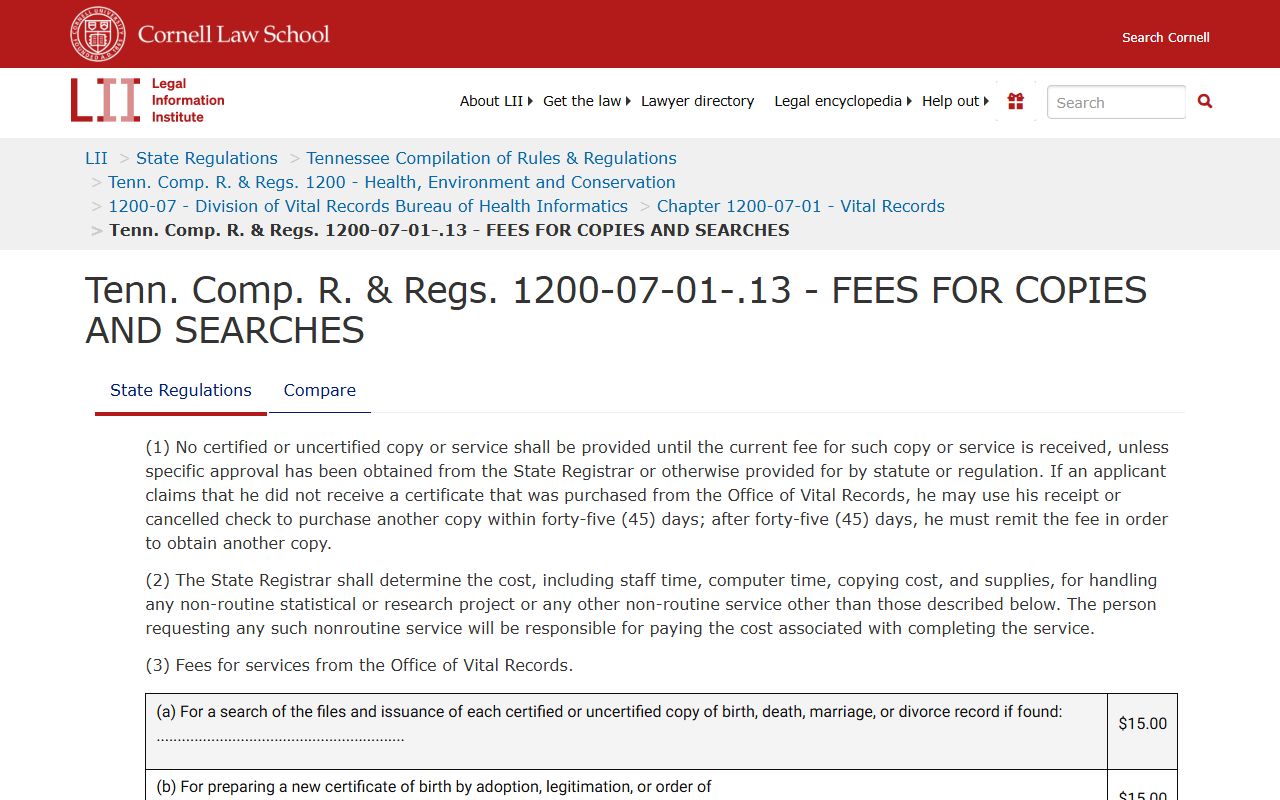
That fee page is helpful because it shows the search charge as well as the copy charge for Tennessee vital records work.
Fayette County Dissolution Of Marriage Copies
Copy requests in Fayette County should be matched to the exact record type. The research says valid identification must accompany Tennessee vital records requests and that county offices require forms and current fees. If you need a state certificate, the fee schedule in Tenn. Comp. R. & Regs. 1200-07-01-.13 is the right rule to review first. It sets the search and copy charge and applies even when the record is not found. That means the search itself is part of the request, not just the copy.
For the Fayette County court file, ask whether you need a plain copy, a certified copy, or the full packet. If the case was filed long ago, the office may need to pull the file from storage or point you to the archive path. The county clerk can also tell you if the search should be by spouse name, filing year, or case number. The cleaner the request, the better the result. That is especially true when the record sits in the county office rather than in the state certificate file.
Simple requests are easier for the clerk and faster for you.
Public Access And Court Rules
Public access guidance at comptroller.tn.gov/office-functions/open-records-counsel/ explains how Tennessee public records requests work. Fayette County divorce files are generally public, but some parts can be sealed or redacted. That is normal when the file includes private financial material or child-related information. The law also gives the custodian a seven business day window to act when the record is not ready right away. That keeps the process moving even when a file needs time to be pulled or reviewed.
The Tennessee court system at tncourts.gov gives the statewide rules, forms, and court structure that apply in Fayette County. The Tennessee Public Records Act and the divorce code work together here. One explains access. The other explains the divorce process itself, including the waiting period and property rules. If you need help with a family law issue that comes up while you are searching, the bar resource link in the research is a practical place to look for domestic relations help and referral information.
Access is open, but the exact paper set still depends on the case.
Fayette County Record Clues
The county marriage books from 1825 are one of the best clues for Fayette County research. If you know the marriage year, you can narrow the search for the later dissolution record. The county seat in Somerville is another useful anchor because it tells you where the local courthouse work centers. Those details matter when you are sorting out old records, spelling changes, or a move between counties. A divorce search can be slow if the date is vague, but those early clues make it much easier to find the right file.
Fayette County follows the same Tennessee path as the rest of the state. County court first. State certificate second. TSLA third. That order keeps the search focused. If the record is old, the archive route may be the only path that still holds the useful paper trail. If the record is recent, the county office and the state office should be enough. Once you know the offices, the year, and the names, the search usually gets much easier to manage.
Note: Old Fayette County divorce material may have moved out of the active courthouse file and into archive holdings.