
Hancock County Dissolution Of Marriage
Hancock County Dissolution Of Marriage records are usually searched through the county courts in Sneedville before a requester turns to Tennessee state sources. That approach matters because the full court file, a shorter divorce certificate, and an older archive record are not the same thing. Hancock County searchers often begin with the case file when they need the decree or filings, then move to the state vital records office if they only need proof that the divorce happened. The county was created in 1844, so older cases can have a long trail. A name, a date range, and the right office make the search much easier.
Hancock County Quick Facts
Hancock County Dissolution Of Marriage Records
The Hancock County Circuit Court page at tennesseecourts.org is the county starting point named in the research. The Circuit Court Clerk is the official custodian, and the Chancery Court handles divorce proceedings, so the right office depends on whether you want the file, a copy, or just a quick record check. Hancock County also has a Clerk and Master office that holds chancery and probate files. That is useful when a divorce file is mixed in with other domestic or estate records. The county clerk has marriage records from 1860, which can help anchor a later dissolution record to the original marriage.
Older Hancock County work can stretch back through archive material. The research notes that FamilySearch has Hancock County Chancery Court Case Files from 1797 to 1950, and the Tennessee State Library and Archives can help when a record falls outside the active county office. For newer records, the state certificate path still matters because the Tennessee Office of Vital Records keeps divorce records for 50 years before older files move to the archives. That split is the key to a clean Hancock County search. If you know the spouse names and the rough year, you can usually pick the right path fast.
The county court page gives the local access point, while the state image below points to the Tennessee Vital Records office that handles current certificates.
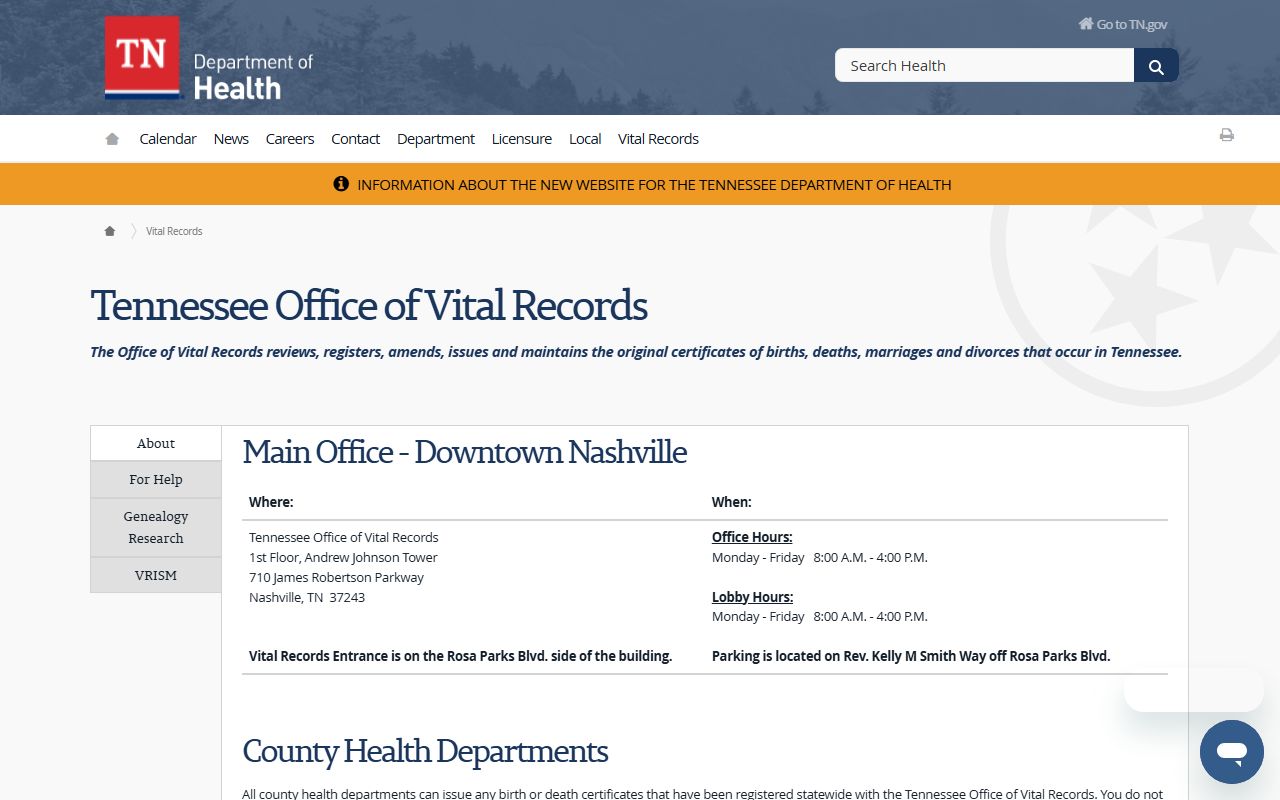
That state office is the right fallback when you only need a certificate and do not need the full Hancock County case file.
Search Hancock County Dissolution Of Marriage
Good Hancock County searches start with plain facts. The research says the clerk and master can search by name, case number, and date range. That is enough for many requests. If you do not know the case number, a full name and a narrow year range can still move the search forward. The county also appears in tncrtinfo.com for Circuit Court and General Sessions access, so a basic online check may help you confirm where a matter sits before you call.
Requests should include the people named in the case, the type of record you want, and valid identification. The research is clear that Hancock County certified-copy requests need forms and ID. That sounds basic, but it keeps the clerk from having to guess what you want. If you need the decree, say decree. If you need a certificate, say certificate. If you need the whole file, say that too. Clear requests save a second trip and help the office match the right record to the right office.
- Full names of both spouses
- Approximate divorce year or date range
- Case number, if you have one
- Whether you need a decree, file, or certificate
- Valid photo ID for certified copies
The Tennessee Supreme Court approved forms at tncourts.gov can also help you see the papers that often appear in a dissolution file. That is useful if you are trying to match the clerk's records to a live or older case.
Hancock County Dissolution Of Marriage Files
Hancock County divorce records are broader than a certificate. The research says the Clerk and Master's Office maintains records that include divorces, custody matters, paternity cases, adoptions, child support, and estate distributions. That mix means a family file may sit beside other county court material. It also means the record can carry more detail than many people expect. A final decree might be only one piece of a larger set. If you need to know how the court handled support or custody, the county file is usually the one to ask for.
Hancock County marriage records begin in 1930 because earlier records were lost. That gap matters for family history, but it does not erase later court material. When the marriage record is weak and the divorce file is clear, the county court record becomes the stronger proof. For older matters, the Tennessee State Library and Archives may still hold a lead even when the active county office does not. The county clerk and the clerk and master both matter here. Each office can hold part of the trail, and each office can point you to the other when the record type shifts.
Note: A state certificate proves the divorce. A Hancock County court file shows what the judge actually ordered, which is why the file is often the better record for legal questions.
Tennessee Dissolution Of Marriage Sources
The Tennessee Office of Vital Records at tn.gov is the official route for current divorce certificates. The CDC Tennessee guide at cdc.gov confirms the same basic structure: Tennessee keeps divorce records for 50 years, the request must include ID, and the payee is Tennessee Vital Records. That matters for Hancock County because it gives you a clean state fallback when the county office is busy or when you only need a certificate.
Historical Hancock County records may also move into the Tennessee State Library and Archives at sos.tn.gov. That is the right place to think about when a case is old enough to be outside current custody. The Tennessee Court System at tncourts.gov gives the broader court rules and approved divorce forms, while the Tennessee divorce code at law.justia.com covers the grounds, residency, and waiting periods that shape the record itself.
The research also points to the state fee schedule at law.cornell.edu, which is useful when you are comparing a county copy request to a state certificate search. Hancock County searchers often need both pieces. One office gives the file. One office gives the shorter proof record. Together they cover most record needs in Tennessee.
A state-level image from the fee and records system sits below because it matches the certificate path that many Hancock County searches eventually use.
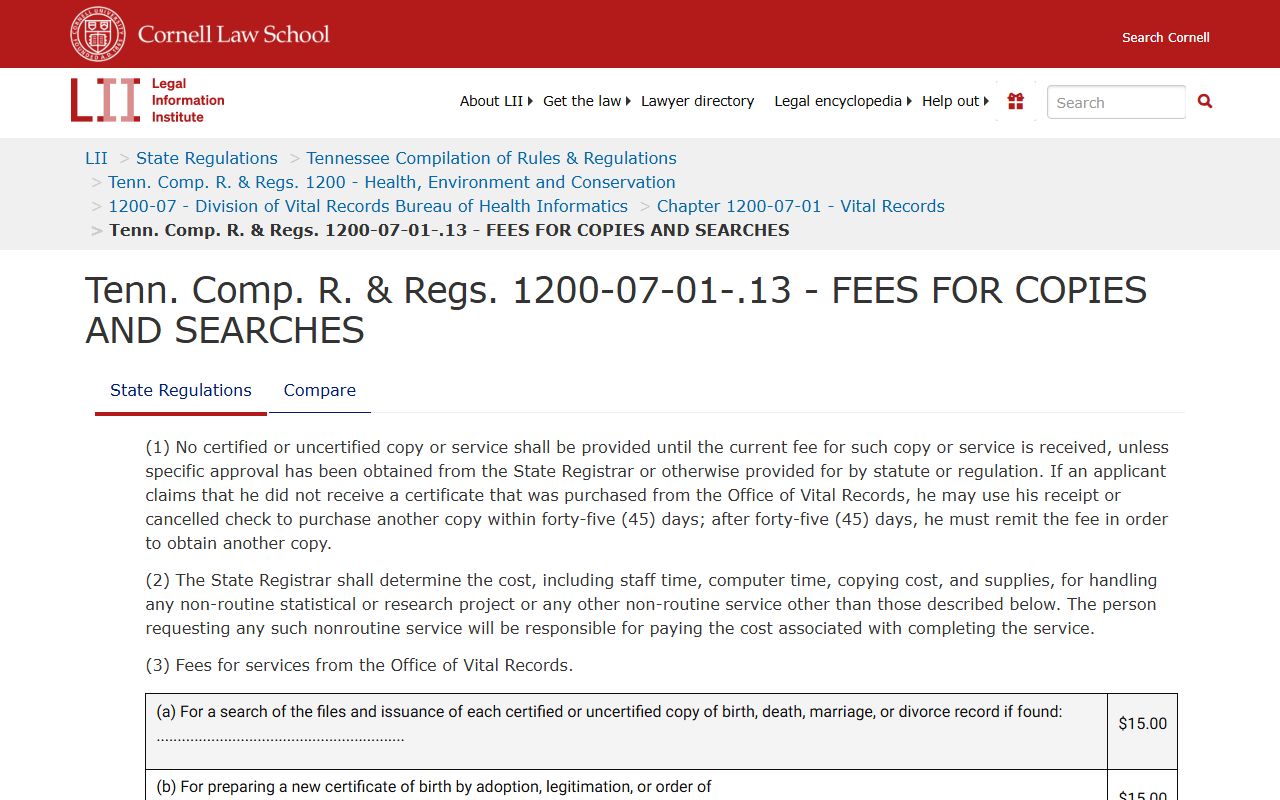
That image reinforces the search fee and copy fee rules that apply when a Hancock County certificate is requested from the state.
Hancock County Public Access Rules
Hancock County records follow Tennessee's access rules. Divorce certificates are confidential, and access is limited to the people named on the certificate, close family members, guardians, and legal representatives. That restriction does not erase the record, but it does shape who can ask for the certified state copy. Court files are different. They are usually public unless a judge seals part of the file or a page gets redacted because it contains private information. That balance is normal in Tennessee family law.
For a broader access frame, the Tennessee Public Records Act guidance at comptroller.tn.gov is helpful. It explains how public records requests work, when agencies should respond, and what copy fees may apply. If the Hancock County clerk needs time to pull a file from storage, the act still gives you a practical path for a written request. The same is true if you need to ask for a record that is not sitting on a public counter.
Note: Older Hancock County divorce records may sit in TSLA or in county storage, so a no-record answer from one office does not always end the search.
Help With Hancock County Dissolution Of Marriage
The Tennessee Court System is the best place to start if you are trying to file, read, or compare Hancock County dissolution papers. It has the approved forms and the state-level instructions that guide agreed divorces. That matters when a file uses a marital dissolution agreement or when the case is moving on an uncontested path. If you need help understanding the papers, the court forms often show the same names and terms that appear in the county record.
The Tennessee Bar Association resource page in the research is also useful because it explains divorce grounds, evidence, and related domestic relations issues. That is not the same as a county record, but it helps you read one. If a Hancock County file is old, thin, or tied to custody and support, that background can make the paper trail easier to follow. A clear county search is often the start, but the legal context is what makes the record useful.