
Haywood County Dissolution Of Marriage
Haywood County Dissolution Of Marriage records usually begin in Brownsville, where the local court file can answer questions that a state certificate cannot. Searchers often need a decree, a docket note, or a short proof copy, and each one can point to a different office. Haywood County also has older marriage books and historical divorce material that help when a current clerk search turns thin. If you know the spouse names and a rough year, you can usually decide fast whether to start with the county court, Tennessee Vital Records, or the archives.
Haywood County Quick Facts
Where To Find Haywood County Dissolution Of Marriage Records
The Haywood County Circuit Court page at tennesseecourts.org is the first place to start because the Circuit Court Clerk is the official custodian and the Chancery Court handles divorce proceedings. That local path matters. A full court file holds the papers that make the case real, while a Tennessee certificate only shows the basic fact that a divorce was entered. When you need the full story, Haywood County court records are the better fit.
The state certificate lane starts with the Tennessee Office of Vital Records. The office keeps divorce records for 50 years, then older records move to the Tennessee State Library and Archives. Haywood County searchers often use that split on purpose. If the divorce is recent, Brownsville and Nashville may both matter. If it is old, the county court may refer you to the archive trail. The county seat, Brownsville, is the natural starting point for the local search.
The state vital records portal at tn.gov is the official Tennessee certificate path for Haywood County Dissolution Of Marriage requests.
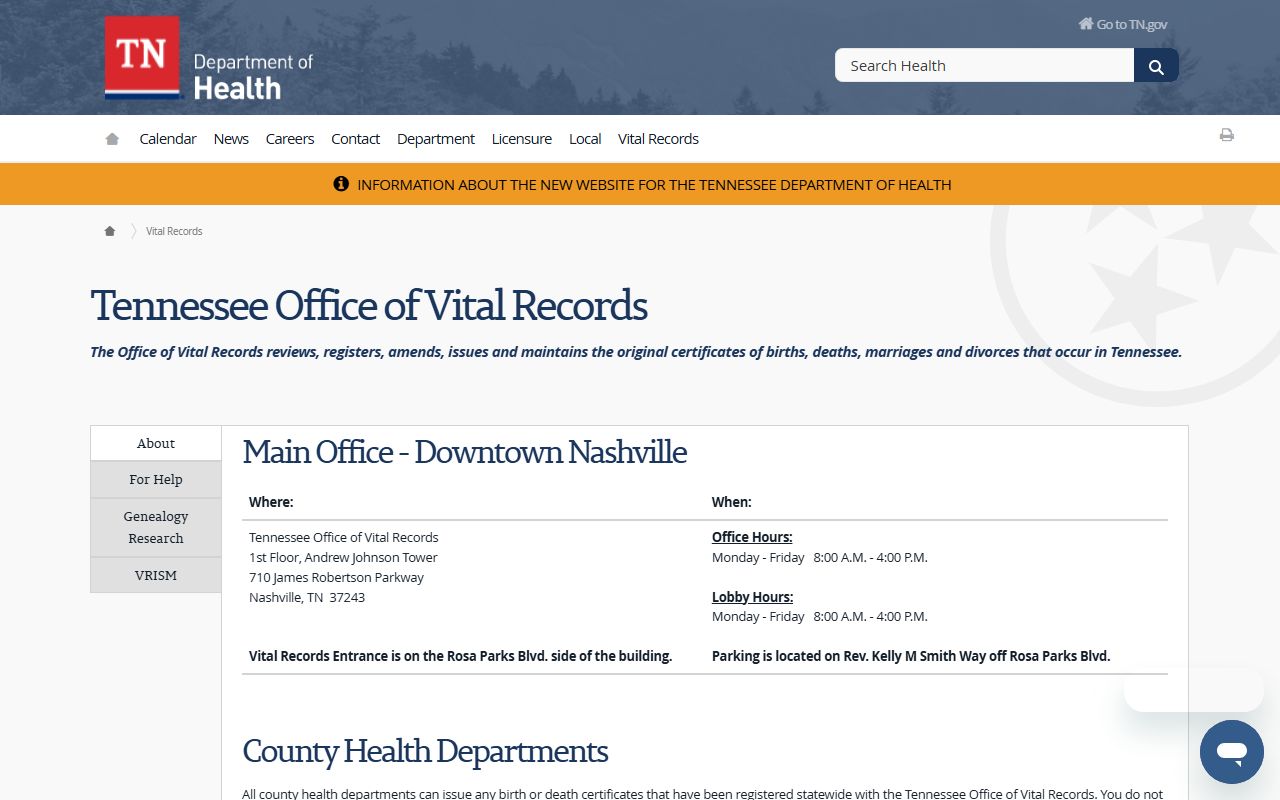
That page is helpful when a Haywood County search needs a certificate instead of the full court file.
| Court | Haywood County Circuit Court Brownsville, Tennessee |
|---|---|
| Clerk | Circuit Court Clerk |
| Website | tennesseecourts.org |
How To Search Haywood County Dissolution Of Marriage Records
Haywood County searches go smoother when you bring the right facts. A clerk can work with a spouse name, but a rough filing year helps a lot more. If you know whether the case was contested or agreed, that can save time too. Tennessee court records are often organized by name, by year, or by case number, so the more precise the request, the faster the search. That is true in Brownsville and just as true at the state office.
The Tennessee Court System at tncourts.gov gives the statewide court path, and the CDC Tennessee guide at cdc.gov reinforces the 50-year retention rule and the identification requirements for Tennessee vital records requests. When you search Haywood County Dissolution Of Marriage records, the county court helps with the decree and the state office helps with the certificate. Keeping those two record types separate prevents a lot of wasted time.
Bring a short request if you visit or call.
- Names of both spouses
- Approximate filing year
- Case number, if known
- Whether you need a decree or certificate
Those four details are often enough for a clerk to narrow the search.
Haywood County Dissolution Of Marriage Files
Haywood County files can be more detailed than a state certificate. A full divorce file may include the complaint, the answer, agreed papers, the final decree, and any notes about custody or support. That makes the county file the right source when you need to know what the court actually ordered. Haywood County also has historical record depth that helps family researchers who are trying to connect a marriage to a later dissolution. The county clerk has marriage records from 1859, which makes it easier to build a timeline before you ever ask for a divorce file.
Older Haywood County material is especially useful because the research notes an Ancestry collection with Divorce Court Docket 1941-1965 and Files 1860-1936. Those references matter when the active courthouse search does not resolve the question. A historical docket can show that a case existed even when the modern office is no longer holding the working file. If you need the legal frame behind the record, Tennessee divorce law is collected in Title 36, Chapter 4 of the Tennessee Code.
The county record is the better proof of what happened in court. The archive trail is the better path when the file is old.
Copies And Fees In Haywood County
Haywood County requests usually involve a fee, and Tennessee keeps the state certificate fee simple. The fee schedule in Tenn. Comp. R. & Regs. 1200-07-01-.13 sets the search and copy charge at $15 for a divorce record search and copy if found. The same fee can still apply when no record is found. That is important because it means the state search itself is a service, not a free look.
The Tennessee Supreme Court approved divorce forms page at tncourts.gov is useful when you are trying to understand which papers may have been filed in an agreed case. It does not replace the county file, but it helps you predict the document trail. If you mail a request, Tennessee Vital Records expects payment by check or money order and a copy of a signed government ID. If you go to Brownsville for the county file, call first so you know whether the clerk wants a written request or a simple name search.
The form packet and the fee schedule together explain why Haywood County records are easier to request when you know the exact record type.
State Sources For Haywood County Dissolution Of Marriage
The Tennessee State Library and Archives at sos.tn.gov handles divorce records older than 50 years, so Haywood County searches often end there when the local office no longer has the active file. TSLA is also the better source for old county material and family history research. That is useful in a county with long marriage record coverage and known historical divorce references. If the Haywood County search is for a case from decades ago, the archive route can be the shortest route back to a usable record.
Public access rules matter too. The Tennessee Public Records Act guidance at comptroller.tn.gov explains how public records requests work and how quickly a records custodian should respond when records are not immediately available. Haywood County court files are generally open, but sealed or redacted pieces may still appear in family law records. That is normal. It protects private details while keeping the core record available for lawful use.
Haywood County Dissolution Of Marriage records sit in a clear chain: local court file, state certificate, then archive history when the record ages out.